Sallust Quotes
We employ the mind to rule, the body to serve.
Sallust. The Conspiracy of Catiline. Translated by J. C. Rolfe, Loeb Classical Library, Harvard University Press, 1921, p. 3.


Referring to the Arawak natives he found when he landed in the "new world—San Salvador:"


In 1642 King Charles I asked the whereabouts of 5 members of Parliament whom he wanted arrested:

The Ndebele were a warrior caste that had captured the land of the Shona and enslaved them. When the whites came there was antipathy to the Ndebele and great fear that they would have to farm and do manual labor, things which they had always required their slaves to do. At the same time the king was a vicious despot who killed many of his subjects at his whim and who was resented even by the Ndebele. The king took poison rather than be captured by the whites. Ironically, the king anticipated the great dissatisfaction of the Ndebele when they could no longer own slaves and had to do their own manual labor.

Secretary of the Navy


His last name was withheld for security purposes.
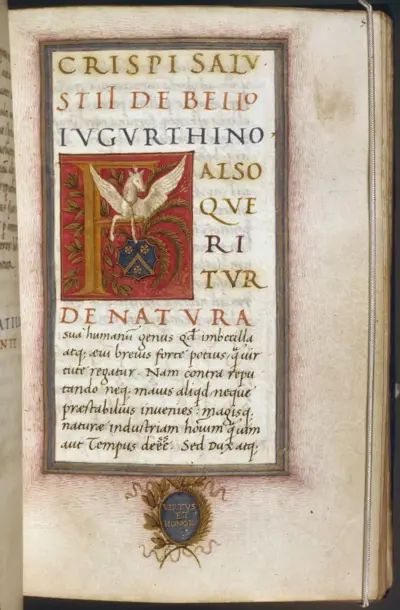
Gaius Sallustius Crispus, usually anglicised as Sallust (/ˈsæləst/; 86 – c. 35 BC), was a Roman historian and politician from an Italian plebeian family. Sallust was born at Amiternum in the country of the Sabines and was a popularis, an opponent of the old Roman aristocracy, throughout his career, and later a partisan of Julius Caesar. Sallust is the earliest known Latin-language Roman historian with surviving works to his name, of which Catiline's War (about the conspiracy in 63 BC of L. Sergius Catilina), The Jugurthine War (about Rome's war against the Numidian King Jugurtha from 111 to 105 BC), and the Histories (of which only fragments survive) are still extant. Sallust was primarily influenced by the Greek historian Thucydides and amassed great (and ill-gotten) wealth from his governorship of Africa.
