Epicurus Quotes
We do not so much need the help of our friends as the confidence of their help in need.
Epicurus. "Vatican Sayings." The Epicurus Reader: Selected Writings and Testimonia, translated by Brad Inwood and L.P. Gerson, Hackett Publishing, 1994, p. 38.


Sherman and Grant had a relationship that was very rare. They had complete confidence in each other, and total loyalty to each other despite the fact that Grant was occasionally a heavy drinker and Sherman suffered from serious depression that was not understood at the time. They both were extremely popular with their troops despite the fact that they fought hard and often took severe casualties. They both were extremely popular with the public. Grant served two terms as President and Sherman was constantly encouraged by most to go into politics. However, Sherman would not do it.


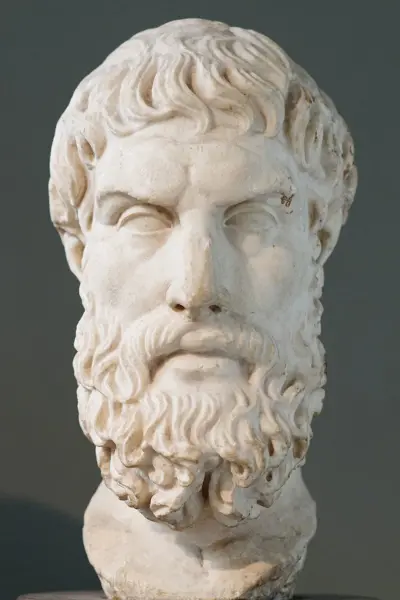
Epicurus (Ancient Greek: Ἐπίκουρος, romanized: Epíkouros; 341–270 BC) was an ancient Greek philosopher and sage who founded Epicureanism, a highly influential school of philosophy. He was born on the Greek island of Samos to Athenian parents. Influenced by Democritus, Aristippus, Pyrrho, and possibly the Cynics, he turned against the Platonism of his day and established his own school, known as "the Garden", in Athens. Epicurus and his followers were known for eating simple meals and discussing a wide range of philosophical subjects. He openly allowed women and slaves to join the school as a matter of policy. Epicurus is said to have originally written over 300 works on various subjects, but the vast majority of these writings have been lost. Only three letters written by him—the letters to Menoeceus, Pythocles, and Herodotus—and two collections of quotes—the Principal Doctrines and the Vatican Sayings—have survived intact, along with a few fragments of his other writings. Most knowledge of his teachings comes from later authors, particularly the biographer Diogenes Laërtius, the Epicurean Roman poet Lucretius and the Epicurean philosopher Philodemus, and with hostile but largely accurate accounts by the Pyrrhonist philosopher Sextus Empiricus, and the Academic Skeptic and statesman Cicero.
