Stanislaw Jerzy Lec Quotes
We are all equal before the law, but not before those appointed to applyit.
Lec, Stanislaw Jerzy. Unkempt Thoughts. Translated by Jacek Galazka, St. Martin's Press, 1962, p. 119.


He was explaining why Section 2 of the Civil Rights Act which allowed normal lawsuits to be filed against officials who were installing schemes to make it difficult for minorities to vote just did not work. Section 5—Preclearance he argued was needed. Preclearance was a requirement that any change in the voting or registration laws, rules or procedures needed to be approved by the Federal Justice Department.

The law was against stealing corn from a farm of field, There was a tradition in Russia that no one should be jailed for corn stealing unless he stole 5 or more ears of corn. However, many people repeatedly helped themselves to 4 ears, and the party wanted it stopped. What is fascinating is that his insistence that the law as promulgated by the Party be enforced literally without regard to issues of higher justice such as starvation and necessity, placed him in the same legal posture as the capitalist countries which also insisted that the laws be enforced and not tempered by higher moral issues of fairness. Whoever has the power to make the laws wants them to be enforced literally. Most others want them tempered by issues of justice, fairness, and necessity.

Americans are divided as to whether this should be encouraged and helped or not.

Judges are restrained by the law and precedence (stare decisis), as well as having to uphold what he/she thinks are undesirable laws or find against laws he thinks are good. He must decide on the law and the facts of the particular case. And if he is an appellate or a Supreme Court judge he must make compromises to accommodate other justices hearing the case along with him/her.


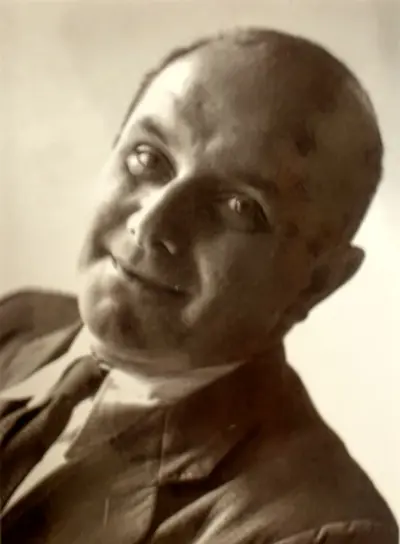
Stanisław Jerzy Lec, born Baron Stanisław Jerzy de Tusch-Letz, was a Polish aphorist and poet. Often mentioned among the greatest writers of post-war Poland, he was one of the most influential aphorists of the 20th century, known for lyrical poetry and skeptical philosophical-moral aphorisms, often with a political subtext.
