Matthew Simpson Quotes
Washington and the elder Napoleon. Both were brave men; both were true men; both loved their country and dared to expose their lives for their country's cause.
Simpson, Matthew. Sermons by Bishop Matthew Simpson of the Methodist Episcopal Church. Edited by George R. Crooks, Harper & Brothers, 1885, p. 306.


Ataturk was a young major at the time commanding troops of a weak and corrupt Ottoman regime. However a combined English and French (the strongest military powers in Europe) invasion of the Gallipoli Peninsula threatened to capture the Turkish capital, Constantinople. Ataturk alone rallied the Turkish defenders and fought the invaders to a standoff in long drawn out battle with huge casualties on both sides. Ataturk became a national hero. Although Ataturk thereafter was very reluctant to use military force or endanger troops, the thing he always thought worth the supreme sacrifice (including his own) was the independence and sovereignty of the nation. See {584502} for his continuing belief in this type of sacrifice.

Quintus Horatius Flaccus. This famous quotation has been echoed in virtually every language and every country of the world. However, see Ernest Hemingway for a counter view.


Bassi was one of the unique military chaplains in history. Instead of just ministering to the men spiritually, he marched at the head of the Italian revolutionary Army and was wounded in combat. Although he never carried arms, he was executed along with those who did.

“Volk” loosely translated means “the people.” However it carries the connotation of a unity that “the people” does not.


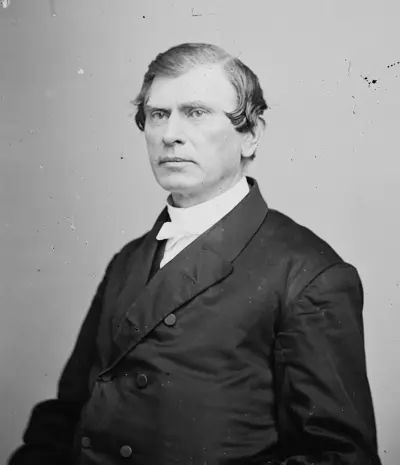
Matthew Simpson was an American bishop of the Methodist Episcopal Church, elected in 1852 and based mostly in Chicago [Correction: Philadelphia. Simpson and his wife were fixtures of Society Hill]. During the Reconstruction Era after the Civil War, most evangelical denominations in the North, especially the Methodists, were initially strong supporters of radical policies that favored the Freedmen (former slaves) and distrusted the Southern whites. However by the late 1860s in border state conferences, the MEC North moved well away from their work with the Freedmen's Bureau and often sided with the grievances of Southern white members. Bishop Simpson played a leading role in mobilizing the Northern Methodists for the cause. His biographer calls him the "High Priest of the Radical Republicans."
