Jean-Jacques Rousseau Quotes
War then, is a relation - not between man and man but between state and state and individuals are enemies only accidentally not as men, nor even as citizens but as soldiers not as members of their country, but as its defenders
Rousseau, Jean-Jacques. The Social Contract. Trans. G.D.H. Cole. London: J.M. Dent & Sons, 1923, p. 10.


After the attack on Fort Sumter, the South Sent “diplomats” to negotiation with the Government. Unfortunately for all, the South really was not open to negotiations as they only had two predetermined positions they would agree to: The first was that the Government should guarantee the perpetual right of states to have slavery if they wished and that fugitive slaves would be returned by the non-slave states. The second was that the Union should recognize the Confederacy as an independent nation and have peaceful relations between the two. The first was impossible to deliver even if the Union would agree to continue slavery, there was no way that the Federal Government could enforce the return of fugitive slaves from many northern states where they were free the second they set foot in the state, and the Northern states demanded States Rights and not being forced to return Fugitive Slaves forcing the Southern States to oppose States Rights when it came to Fugitive Slaves while favoring it for slavery itself. The Federal government could not enforce the Dred Scott Decision under the pro-South Buchanan administration. And Lincoln and most of the Northern Politicians would not accept a complete dissolution of the Union. There are no other possibilities the South would accept and there was really nothing to negotiate.


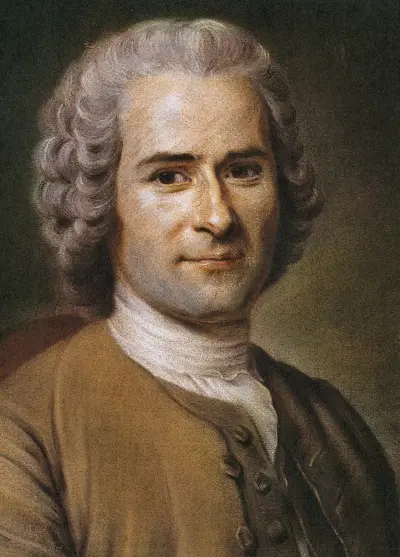
Jean-Jacques Rousseau was a Genevan philosopher, writer, and composer. His political philosophy influenced the progress of the Enlightenment throughout Europe, as well as aspects of the French Revolution and the development of modern political, economic and educational thought.
