Langston Hughes Quotes
Very early in life, it seemed to me that there was a relationship between the problems of the Negro people in America and the Jewish people in Russia, and that the Jewish people's problems were worse than ours.
Hughes, Langston. I Wonder as I Wander: An Autobiographical Journey. Rinehart & Company, 1956, p. 69.


Constantine the Great. Roman Emperors saw Christians as their most dangerous foes. However, Constantine converted to Christianity and ceased the vicious persecution of the Christians. As politicians in many societies need scapegoats to blame for various problems, and the Christians were no longer available, the Jews then became the targeted scapegoats.


The issue of slavery which had been suppressed in Congress for the first decades of the nation broke out when Missouri statehood was considered. By previous agreement, slavery was not even discussed in Congress but the time period elapsed. Tallmadge not only proposed that no more slaves could come into Missouri {613176} but most shocking to the Southerners was that every person born in the new state would be free at the age of 25. In a generation, there would be no more slavery in Missouri and there would be no economic compensation for slave owners at all. The House of Representatives accepted the amendment, but it failed in the Senate. At that time, Senators were not elected by voters but were appointed by the state legislators and the Southern slave states had a disproportionate share of the senate from a population point of view. But what this quotation shows clearly that a majority of the country in 1819 were opposed to slavery and were willing to end it without compensation.


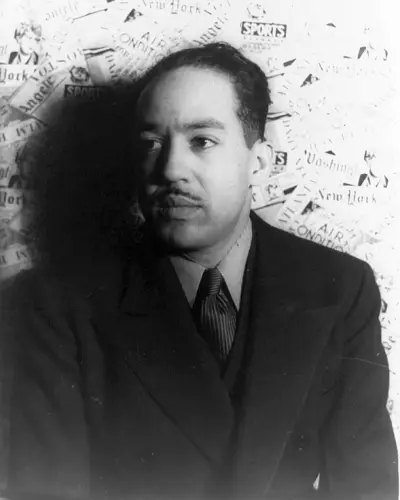
James Mercer Langston Hughes was an American poet, social activist, novelist, playwright, and columnist from Joplin, Missouri. One of the earliest innovators of the then-new literary art form called jazz poetry, Hughes is best known as a leader of the Harlem Renaissance. He famously wrote about the period that "the Negro was in vogue", which was later paraphrased as "when Harlem was in vogue."
