John Sherman Cooper Quotes
Very curious, at the age of about 13 years, Oswald began to study Marxism and he kept on in his writing, affirming that he was a Marxist. Probably he did want to show himself as a great, supreme Marxist.
United States, Congress, House, Select Committee on Assassinations. Investigation of the Assassination of President John F. Kennedy: Hearings Before the Select Committee on Assassinations of the U.S. House of Representatives, Ninety-Fifth Congress, Second Session. Vol. 3, U.S. Government Printing Office, 1979.


Ataturk was not receptive toward Communism as some other world leaders were at the time. He saw its weakness far earlier than many others.


This was the typical language of the 1940’s and 1950’s at the height of the Red Scare used by the FBI and others to smear their opponents and political enemies. Seldes had published an article very critical of the FBI and its investigations of labor unions and other liberal organizations. See George Seldes, 1940 quotation.


Vladimir Lenin. Although Plekhanov was the intellectual giant of Russian communism, he died only two years into the revolution. He was never happy with some of the pragmatic compromises the younger firebrand communist leaders were making from their ideals. By the time he passed away, most, especially the younger, communist leaders like Stalin saw him as an old obstructionist and he was never celebrated as a hero by the communists. It was Lenin and older leaders like Trotsky who appreciated him. See {590462}.

Unlike most of his televangelist successors, Sheen was very ecumenical. He was clearly Catholic but had a very significant Protestant and Jewish Audience.


Vladimir Lenin. While Lenin was of this view, Stalin and other hard liners disagreed. They not only imposed their brand of communism on their own people via force with terrible consequences for any dissidents, but the Soviet Army imposed Communism on most of the states of Eastern Europe, and those states in turn used their Armies and secret police to impose it on their own citizens.


He had asked a family friend not to bring books by Hemmingway into his home. The friend asked why and received this answer. Koch and his brother were the largest political contributors in the United States, so they had enormous influence on Republicans (they only made political contributions to conservative organizations).

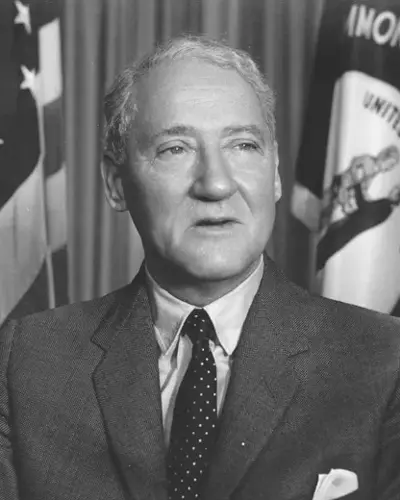
John Sherman Cooper was an American politician, jurist, and diplomat from the Commonwealth of Kentucky. He served three non-consecutive, partial terms in the United States Senate before being elected to two full terms in 1960 and 1966. He also served as U.S. Ambassador to India from 1955 to 1956 and U.S. Ambassador to East Germany from 1974 to 1976. He was the first Republican to be popularly elected to more than one term as a senator from Kentucky and, in both 1960 and 1966, he set records for the largest victory margin for a Kentucky senatorial candidate from either party.
