Jacobo Arbenz Guzman Quotes
Unfortunately even the President of the United States of America has made little of his high office, and he too, either through lack of information or other reasons, has lent himself to the campaign of pressure and intimidation against Guatemala
The President was a left wing nationalist whose policies were counter to the interests of the United Fruit Company and other American businesses. His plan to build another canal connecting Atlantic and Pacific Oceans threatened to take business and control from the Panama Canal which at that point America owned. The CIA covertly engineered a right wing coup ousting him. At the time, it was US foreign policy to try and change any regime that was not acceptable to American Business interests in Latin America or was socialistic or both.
Jacobo Arbenz Guzman, 1913–1971, President of Guatemala, Quoted in Stephen Schlesinger and Stephen Kinzer, Bitter Fruit: The Story of the American Coup in Guatemala
Sourced by: Eigen's Political and Historical Quotations


This quotation is puzzling to many in that Olasky seems to be castigating the President because he wanted to develop a “Great Society”—because he had a great vision for America. However, to Olasky and a small core of religious fundamentalist conservatives a President wanting to develop a great society was bad for two reasons. They do not believe that the government – any government should shape the nature of the society or interfere with individuals and families in shaping society. A government that could have such a vision and implement it must be a big government which is per se undesirable. In addition, in their orthodox view God has already determined the vision for society and no man should try and substitute his vision for God’s commandments. This concern of an energetic secular government having independent vision is not only a problem for the right wing Christian fundamentalists, but is typical of Muslim fundamentalists and Jewish also. There were a small minority of Jewish Israeli fundamentalists who objected to the creation of the State of Israel at the birth of the Jewish state for the same reasons that Olasky gives for opposing a strong visionary government.

The inconsistency of the policy logic of attacking Iraq but not the other two countries of the "axis of evil" caused problems for our British allies who preferred justifying the attack on Iraq on its own merit without any linkage to Iran and North Korea. What made the Iraq invasion even more puzzling was that both Iran and North Korea were greater dangers to the United States and expressed a deep animus.


Misha Saakashvili, the President of Georgia, the ex-Soviet State, had a good bit of support in American political circles and decided to start a military conflict with Russia attacking a disputed area whose people had rejected Georgia and preferred the Russian affiliation and control. He was confident that the US would protect him from major retaliation. The Russians first moved troops into the attacked area and then started attacking Georgia military assets. Rice and the Russian Foreign minister were negotiating a cease fire on which they agreed to details and were going to impose them on Georgia. However, Lavrov demanded that Georgia President Saakashvili be deposed. Either nation had the power to do this, and both had in many past instances deposed or overthrown the leaders of other nations—democratically elected or not. This quote is very interesting because in this particular case the United States was stating its idealistic policy and not its “real-politic: that it exhibited in helping to bring down and depose democratically elected in Iran, Chile, Vietnam, Venezuela, Haiti, and others. Ironically, there were many in the US who wanted Saakashvili deposed for unilaterally starting a military conflict Russia that had to involve the U. S.

Bhutto, after Pakistan’s defeat by India, initiated a massive nuclear bomb development program which was contrary to the Nuclear Non-Proliferation policy of the United States. Bhutto went ahead anyway and soon Pakistan had a nuclear capability, much to the distress of the other nuclear powers in the world.

John E. Puerifoy, the American ambassador to Guatemala

In 1953 the Senator had proposed a Constitutional amendment that would severely curtail the treaty making powers of the President. President Eisenhower actively opposed Bricker and the right wing of his own party. The Senator was outraged. Despite Bricker’s complaining, the public and the Congress sided with the President.


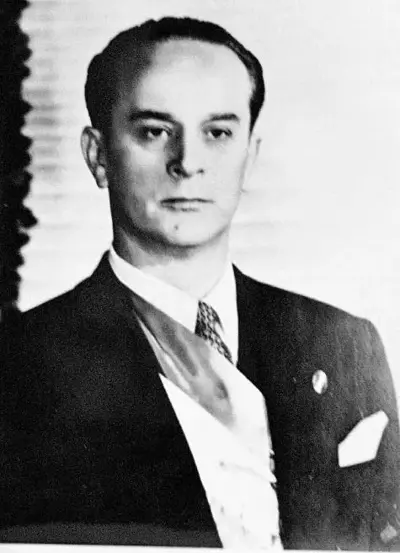
Juan Jacobo Árbenz Guzmán was a Guatemalan military officer and politician who served as the 25th President of Guatemala. He was Minister of National Defense from 1944 to 1951, and the second democratically elected President of Guatemala, from 1951 to 1954. He was a major figure in the ten-year Guatemalan Revolution, which represented some of the few years of representative democracy in Guatemalan history. The landmark program of agrarian reform Árbenz enacted as president was very influential across Latin America.
