Jennifer Doudna Quotes
Understanding how Cas9 is able to locate specific 20-base-pair target sequences within genomes that are millions to billions of base pairs long may enable improvements to gene targeting and genome editing efforts in bacteria and other types of cells.
Sanders, Robert. "Researchers Unravel the Mechanism of the CRISPR-Cas9 DNA Cleavage System." UC Berkeley News, University of California, Berkeley, 29 Jan. 2014.


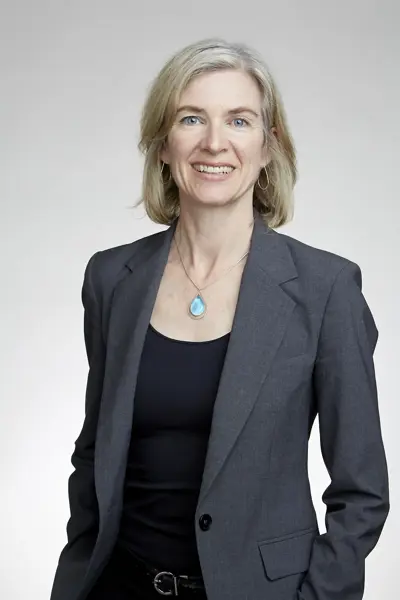
Jennifer Anne Doudna ForMemRS is an American biochemist known for her pioneering work in CRISPR gene editing, for which she was awarded the 2020 Nobel Prize in Chemistry along with Emmanuelle Charpentier. She is the Li Ka Shing Chancellor's Chair Professor in the Department of Chemistry and the Department of Molecular and Cell Biology at the University of California, Berkeley. She has been an investigator with the Howard Hughes Medical Institute since 1997.
