James Russell Lowell Quotes
Truth forever on the scaffold, Wrong forever on the throne,—, Yet that scaffold sways the future, and, behind the dim unknown,, Standeth God within the shadow, keeping watch above his own.
James Russell Lowell, 1819-1891, U. S. Ambassador to Spain & England, The Present Crisis, 1844
Sourced by: Eigen's Political and Historical Quotations


He was in many ways centuries ahead of his time with constructive ideas for any people and age. However, this was one of the exceptions. Unfortunately it became the norm for most Islamic countries even to modern times. Essentially, a bad ruler in this Islamic doctrine can be removed only if he does not follow Islam. For just being unjust or incompetent, revolution is not allowed and prayer is the only recourse. That is one of the major reasons that there have been so few Arab uprisings and revolutions although there have been many assassinations for alleged religious apostasy or insufficiency.

As a slave holder himself, this was a dramatic statement. Slavery was immoral, God’s justice will not be on the white slave owners side, a slave revolt or other event could occur and change things radically. One great puzzlement of American history has been why Jefferson, who wrote so eloquently against slavery and predicted the disaster that would come. would himself keep his slaves and never free them as George Washington did. Some argue that he was so broke financially, that he could not afford to free them.


His family was one of the wealthiest in Rhode Island. He called in the entire family and he formally read the deed. The family itself had actually been active in the slave trade under John, his oldest brother, so this deed was very shocking to them. Moses became a leading abolitionist in Rhode Island and John the major defender of slavery in the state. Despite that, the brothers actually remained close.
The speech was an attempt to justify the Dirty War and the kidnappings, tortures, and killing of many citizens.
Arguing for freedom of the press for his liberal Catholic journal, he contended:


A delegation from Sinn Fein, headed by Arthur Griffith and Michael Collins, had negotiated a treaty of Irish Independence except that it did not cover Northern Ireland where the majority of the people wanted to stay a part of Britain. For 700 years, the Irish had fought for independence, and finally they got it for the vast majority of Ireland and the overwhelming majority of the Catholics of Ireland. The alternative to agreeing to the treaty was to continue the war between the IRA and the British Troops. At the time, the IRA was just about totally beaten and probably could not hold out another month. De Valera, a very shrewd politician, as the leader of Sinn Fein (and the IRA) would normally have headed the Irish Delegation. But he chose not to because he realized that they would never get independence for all 32 counties of Ireland as the British would not leave the Northern Ireland Protestants to their fates against their will. The best Ireland could get was Independence for all of Catholic majority Ireland. And he knew that public opinion would oppose giving up even one county becuse that was what the leaders had told the people for years. So De Valera let his two associates take the popular blame after he denounced the treaty with his famous quotation {639690}. Shortly after that, Michael Collins, the brilliant military Commander of the IRA who signed the treaty was assassinated. To many, it was as if De Valera had pulled the trigger. The treaty was ratified by a 7 vote margin by the Dail as there was no army left to fight, and the angry Irish electorate voted for De Valera as Ireland’s first President. The politician had won; the patriot had died. De Valera continued to speak out against the Dail Majority for the “immoral” act of ratifying the treaty

He was referring to a case where an unarmed criminal suspect was being arrested by 5 police officers who choked him to death in what the coroner ruled was a homicide. Some police union spokesmen justified the homicide on the grounds that the victim had resisted arrest (in great question from viewing the video tapes). “Had he not, he would not be dead”. The spokesman ignored the fact that the choke hold that the police used was prohibited by the Police Department Manual and Rules as well as imprudent and unnecessary in that case. Surely 5 trained policemen can physically control 1 unarmed man without choking him Sharpton observed, and with this pithy quote, put the tragedy into perspective as a violation of civil rights.
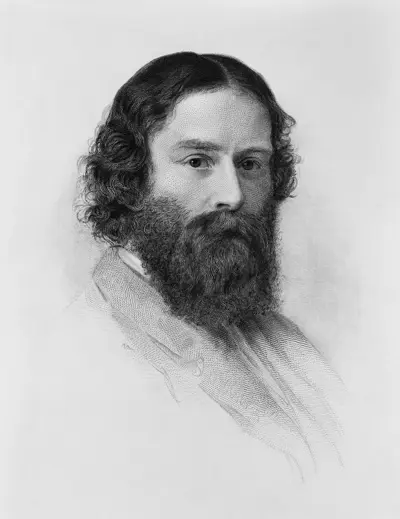
James Russell Lowell was an American Romantic poet, critic, editor, and diplomat. He is associated with the Fireside Poets, a group of New England writers who were among the first American poets that rivaled the popularity of British poets. These writers usually used conventional forms and meters in their poetry, making them suitable for families entertaining at their fireside.
