Walter Russell Mead Quotes
Too many…especially in Europe, conflate democracy as process—free elections with a free press to determine who gets to run a particular country—with electoral outcomes. They define a democratic election as one in which the right people win. Under the former definition, any reasonably free election is a victory for democracy, even if the winner is a bad person with bad ideas. But under the latter definition, elections that bring the wrong candidates to power are considered undemocratic. An electoral victory by a party that wants to crack down on illegal immigrants? A failure of democracy. Victory by a party that refuses to rework society around the preferences of people who feel they were born into bodies of the wrong sex? A gain for authoritarianism. Victory by a party that rejects green-energy mandates as too expensive and impractical? An attack on everything democracy is about. … [It] becomes the duty of democracy advocates to suppress their domestic opponents. The police should investigate citizens who post “antidemocratic” tweets about trans people or migration. Governments can and should ban antidemocratic candidates or outlaw antidemocratic political parties for the crime of advocating “undemocratic” ideas. It doesn’t matter if these ideas are popular. The more popular an “antidemocratic” idea becomes, the more necessary it is to suppress its supporters. This approach is madness—an unmitigated and total disaster for the democratic cause.


The executive order gave the power to the Secretary of the Treasury to block and freeze assets of anyone or any organization that was assisting the insurgents and abetting the internecine violence in Iraq. Typical of many George W. Bush efforts, the idea was a good one and indeed necessary, but the way it was implemented was very poor. Bush was always trying to seize more power for the Executive Branch and wanted as little judicial review as possible. Under the Executive Order if any organization were accused of assisting the insurgents and a lawyer defended them from having their assets blocked, then the lawyer could also have his assets blocked as he was “assisting” the offending organization. The purpose was to prevent undemocratic elements from thwarting democracy in Iraq, but the method implemented was itself quite undemocratic—a contradiction that Bush found himself in very often. Allowing for judicial approval before seizure would have helped a great deal.


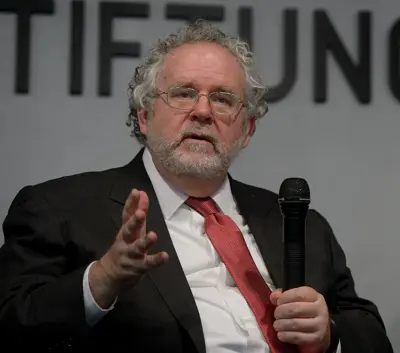
Walter Russell Mead is an American academic. He is the James Clarke Chace Professor of Foreign Affairs and Humanities at Bard College and taught American foreign policy at Yale University. He was also the editor-at-large of The American Interest magazine. Mead is a columnist for The Wall Street Journal and a scholar at the Hudson Institute.
