Barbara Jordan Quotes
Today, I am an inquisitor. I shall not sit here and be an idle spectator to the diminution, the subversion, the destruction of the Constitution.
Jordan, Barbara. "Statement on the Articles of Impeachment." House Judiciary Committee, 25 July 1974, Rayburn House Office Building, Washington, D.C. Address.


The Roosevelt administration had stemmed the tide of Hoover’s Great Depression but the nation had not yet recovered. The New Deal measures, most of which would be considered fundamental to good government 50 years later was being constantly thwarted by a Supreme Court with a strong arch conservative majority headed by James McReynolds, a virulent, overt, anti-Semitic racist, who hated FDR—see {616652} and {585241}. The situation was to many like that which existed before the Civil War when the Court rendered the Dred Scott decision that so harmed the nation. Frankfurter, not then a Supreme Court Justice, urged Roosevelt to do something lest the American Public lose all respect for the Court and our Constitutional system and have the nation harmed by not allowing reforms like child labor laws to go through. The court actually ruled by a narrow majority that the government could not pass laws making it illegal for 11 year old children to work in coal mines or factories. FDR attempted to add more justices turning the majority into a majority—“packing the Supreme Court”, but that politically backfired. Some of the reforms never went through while others needed Constitutional Amendments like the end to Prohibition.

The Chief Justice at the time was an ultra-conservative judge, who together with his 8 colleagues—all conservative—had blocked much of the democratic and progressive legislation that the Congress had passed. FDR had a much different legal and philosophical view of the Constitution than the Chief Justice, and the court would declare much of his New Deal legislation, passed in the emergency of the Great Depression, unconstitutional. Almost all of those “unconstitutional” things were years later passed again and this time a more modern court found they were Constitutional.

The president was asked if he supported the Supreme court's school desegregation decision:


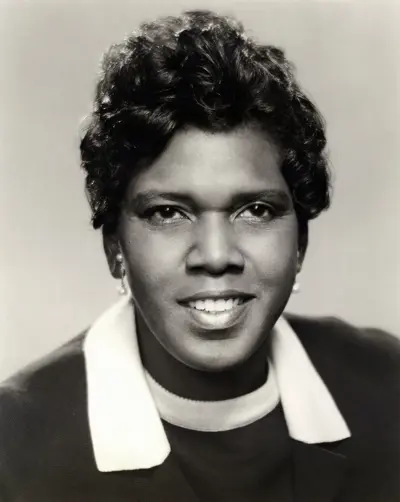
Barbara Charline Jordan was an American lawyer, educator and politician who was a leader in the Civil Rights Movement. A Democrat, she was the first African American elected to the Texas Senate after Reconstruction and the first Southern African-American woman elected to the United States House of Representatives. She was best known for her eloquent opening statement at the House Judiciary Committee hearings during the impeachment process against Richard Nixon, and as the first African-American as well as the first woman to deliver a keynote address at the 1976 Democratic National Convention. She received the Presidential Medal of Freedom, among numerous other honors. She was a member of the Peabody Awards Board of Jurors from 1978 to 1980. She was the first African-American woman to be buried in the Texas State Cemetery. Jordan's work as chair of the U.S. Commission on Immigration Reform, which recommended reducing legal immigration by about one-third, is frequently cited by American immigration restrictionists.
