Patrick Chappatte Quotes
Today, fear of bloodshed is forcing us into recognizing new taboos: those of Muslims.
Chappatte, Patrick. Quoted in "European Cartoonists Back Danish Colleagues" by Alan Riding. The New York Times, 5 Feb. 2006.


Througout political history, including in America, opportunistic, unscruplous politicians have appealed to the prejudices and hates of subsets of the population for others (usually minorities) to get elected or obtain support for legislation and administrative action. In America this has been an element of all populist movements—an enemy. This quote is particularly enlightening in that it shows that the real need is to have a minority to focus the public against—which one is not as material as the fact that there is one.


The amazing thing about this quotation of 1913 is that at the end of the 20th century the Christians were again at the Muslims throats and Bosnian Muslims were being murdered and ethnically cleansed by the Roman Catholics of Croatia and the Eastern Orthodox Christians of Serbia. The hatred had persisted—the legacy of 1000 years before.


Refers to a system of plural wives


At the time very few national leaders and still fewer politicians were willing to even criticize McCarthy or his methods. Flanders, in a great example of political courage, did so.


Just days before September 11. While in America, such a remark would just be considered an insensitive and inappropriate utterance, in France, he was brought before the courts and threatened with jail and a large monetary fine under a 1972 French law which bans hate speech. See {595311}


These kinds of inflammatory sermons are delivered with the approval of the king and royal family who crack down on any cleric who preaches what they do not approve of.


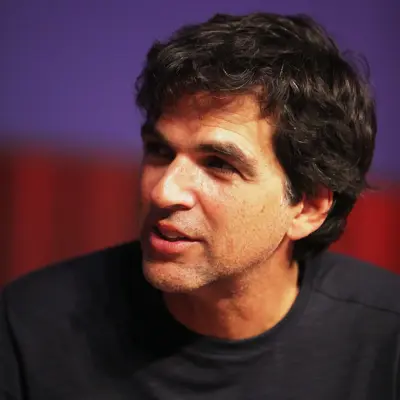
Patrick Chappatte (known simply as Chappatte) is a Lebanese-Swiss cartoonist known for his work for Le Temps, Neue Zürcher Zeitung (Sunday edition), the German news magazine Der Spiegel, and The New York Times International Edition. He also worked as an illustrator for the New York Times and as cartoonist for Newsweek. Many of his cartoons reflect events in Swiss and international news, such as the September 11 attacks, the rise of the Swiss People's Party, and the Israeli–Palestinian conflict.
