Maxim Gorky Quotes
To speak the truth is the most difficult of all arts, for in its "pure" form, not connected with the interests of individuals, groups, classes, or nations, truth is almost completely unsuitable for use by the Philistine and is unacceptable to him.
Gorky, Maxim. Untimely Thoughts: Essays on Revolution, Culture and the Bolsheviks, 1917-1918. Translated by Herman Ermolaev, Paul S. Eriksson, Inc., 1968.


He was officially hanged for his offence of blasphemy. See {619712}. His execution, which raised considerable concern, was the last execution for blasphemy in Britain.


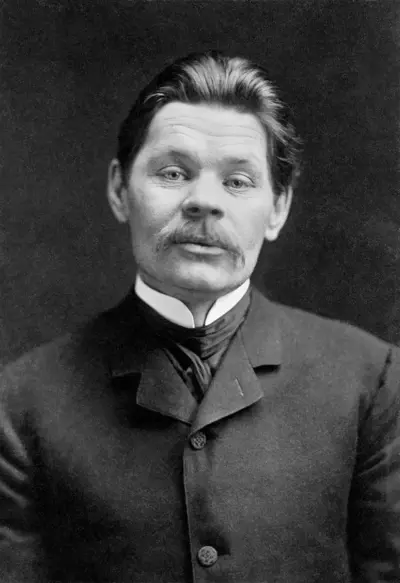
Alexei Maximovich Peshkov, primarily known as Maxim Gorky (Russian: Макси́м Го́рький), was a Russian and Soviet writer, a founder of the socialist realism literary method, and a political activist. He was also a five-time nominee for the Nobel Prize in Literature. Prior to his renown as an author, he frequently changed jobs and roamed across the Russian Empire; these experiences would later influence his writing. Gorky's most famous works were The Lower Depths (1902), Twenty-six Men and a Girl (1899), The Song of the Stormy Petrel (1901), My Childhood (1913–1914), Mother (1906), Summerfolk (1904) and Children of the Sun (1905). He had associations with fellow Russian writers Leo Tolstoy and Anton Chekhov; Gorky would later mention them in his memoirs.
