Yukio Mishima Quotes
To see human beings in agony, to see them covered in blood and to hear their death groans, makes people humble. It makes their spirits delicate, bright, peaceful. It's never at such times that we become cruel or bloodthirsty. No, it's on a beautiful spring afternoon like this that people suddenly become cruel. It's at a moment like this, don't you think, while one's vaguely watching the sun as it peeps through the leaves of the trees above a well-mown lawn? Every possible nightmare in the world, every possible nightmare in history, has come into being like this.
Mishima, Yukio. Madame de Sade. Translated by Donald Keene, Grove Press, 1967, p. 32.


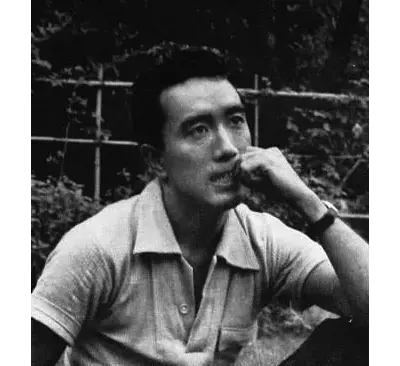
Yukio Mishima, born Kimitake Hiraoka (平岡 公威, Hiraoka Kimitake) was a Japanese author, poet, playwright, actor, model, Shintoist, nationalist, and founder of the Tatenokai (楯の会, "Shield Society"), an unarmed civilian militia. Mishima is considered one of the most important Japanese authors of the 20th century. He was considered for the Nobel Prize in Literature in 1968, but the award went to his countryman and benefactor Yasunari Kawabata. His works include the novels Confessions of a Mask (仮面の告白, Kamen no kokuhaku) and The Temple of the Golden Pavilion (金閣寺, Kinkaku-ji), and the autobiographical essay "Sun and Steel" (太陽と鉄, Taiyō to tetsu). Mishima's work is characterized by "its luxurious vocabulary and decadent metaphors, its fusion of traditional Japanese and modern Western literary styles, and its obsessive assertions of the unity of beauty, eroticism and death".
