Mahatma Gandhi Quotes
To prevent the workers from going to their work by standing in front of them is pure violence and must be given up.
Gandhi, Mahatma. Young India, 26 June 1924, p. 210.


Half a century later some in the Muslim world were justifying terrorism, violence and intimidation on the grounds of desperation of the unique circumstances Islam as in and the attack Islam was under. However, many scholars use this quotation to illustrate that extra legal means and violence has been a Muslim tactic. It actually goes back to the beginning of Islam. It was ironic that Ali Kahn, after supporting extra-legal and violent means of achieving political objectives was himself the victim when he was assassinated in 1951.

While Ray was very sympathetic towards the strike, his father’s attitude was typical of that of business men across the nation. A picket line or demonstration was a “mob” and mobs should be broken up before they do physical damage to people or property. “Grape” and “canister” were types of ammunition for cannon that was used against personnel in war. One shell could kill 20-30 men in a crowd.

The Whites were the old nobility and conservatives who, after the Czar had been deposed, fought a civil war for control of Russia against the Reds—the Bolsheviks. The Whites were allied with the Cossacks, a particularly vicious, and cruel groups of traditional cavalry who previously had done much of the Czar’s dirty work. They were responsible for most of the Anti-Semitic pogroms, and their affiliation with the Whites pushed most Jewish Russians to the Reds.
In never occurred to him that he and his family were also adverse to the backbreaking stoop labor of cotton picking.


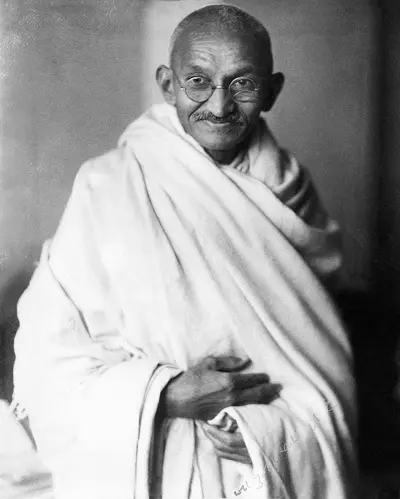
Mohandas Karamchand Gandhi was an Indian lawyer, anti-colonial nationalist, and political ethicist, who employed nonviolent resistance to lead the successful campaign for India's independence from British rule, and in turn inspired movements for civil rights and freedom across the world. The honorific Mahātmā (Sanskrit: "great-souled", "venerable"), first applied to him in 1914 in South Africa, is now used throughout the world.
