B. R. Ambedkar Quotes
To my mind, there is no doubt that this Gandhi age is the dark age of India. It is an age in which people, instead of looking for their ideals in the future, are returning to antiquity.
Ambedkar, B. R. "Ranade, Gandhi and Jinnah." Dr. Babasaheb Ambedkar: Writings and Speeches, Vol. 1, Education Department, Government of Maharashtra, 1979, p. 237.


The “execution” to which she refers was the famous speech given to communist party leaders by Nikita Khrushchev where he publicly revealed the worst crimes of Stalin and Stalinist Russia. Prior to that, publicly Stalin was godlike in the Soviet Union. Decades of disillusionment with Stalinist Russia set the stage for the fall of the Soviet Union which was also accompanied by massive corruption, economic chaos and a diminution of the standard of living of most Russians. Some, including many of the younger people who had not lived through the Stalinist horrors, were resentful that the great era of Soviet military, scientific, and political greatness and dominance was completely overshadowed by the revelation of the purges, gulags, terror and murder. Prudnikova represents that school of thought.

The ANC is the African National Congress, the majority political party of South Africa. The Communists of the 20th century espoused the cause of Blacks throughout the world and their struggle for equal rights as a method of recruiting people to their cause. Racists, then as a political ploy, began to refer to all those advocating Black equality as communists. This carried over even after apartheid had ended in South Africa. The same technique was used by American, racist, segregationists to label all those who advocated desegregation as communists, because the Communist Party advocated an end to segregation.

Agree resigned from the CIA in protest to its political positions.

There was much democratic pressure from the Russian workers in the decade after the Russian Revolution. This was brutally suppressed by Stalin Immediately after the Russian Revolution, the provisional government appointed him as Ambassador to the United States. However, the provisional government was supplanted when the Bolsheviks took over. Not enamored of Communism, he stayed in the United States with many other Russian refugees.


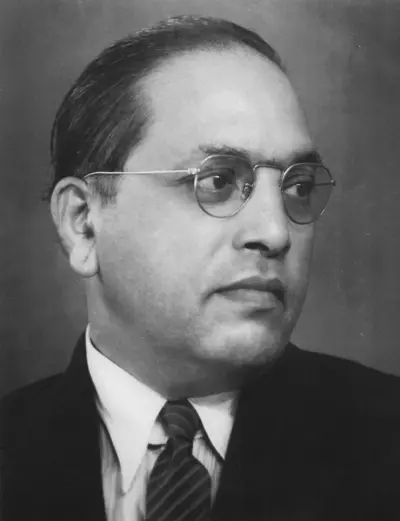
Bhimrao Ramji Ambedkar, also known as Babasaheb Ambedkar ([bʌbəsɑheb ɑmbɛdkɑə]), was an Indian jurist, economist, politician and social reformer, who inspired the Dalit Buddhist movement and campaigned against social discrimination towards the untouchables (Dalits). He was British India's Minister of Labour in Viceroy's Executive Council, Chairman of the Constituent Drafting committee, independent India's first Minister of Law and Justice, and considered the chief architect of the Constitution of India.
