Aristotle Quotes
To let them share in the highest offices is to take a risk; inevitably, their unjust standards will cause them to commit injustice, and their lack of judgement will lead them into error. On the other hand there is a risk in not giving them a share, and in their non participation, for when there are many who have no property and no honours they inevitably constitute a huge hostile element in the state. But it can still remain open to them to participate in deliberating and judging.
Aristotle. The Politics. Translated by T. A. Sinclair, Penguin Books, 1962, p. 123.


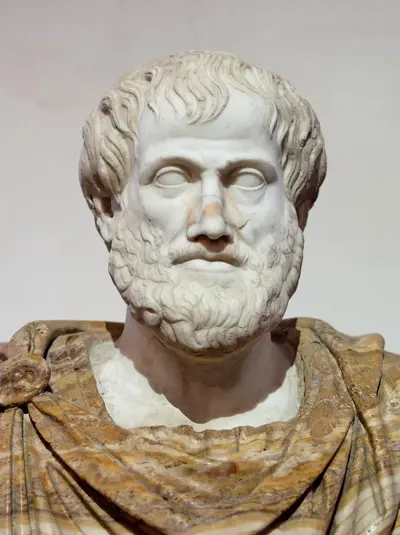
Aristotle (/ærɪˈstɒtəl/; Greek: Ἀριστοτέλης Aristotélēs, pronounced [aristotélɛːs]; 384–322 BC) was a Greek philosopher and polymath during the Classical period in Ancient Greece. Taught by Plato, he was the founder of the Lyceum, the Peripatetic school of philosophy, and the Aristotelian tradition. His writings cover many subjects including physics, biology, zoology, metaphysics, logic, ethics, aesthetics, poetry, theatre, music, rhetoric, psychology, linguistics, economics, politics, meteorology, geology and government. Aristotle provided a complex synthesis of the various philosophies existing prior to him. It was above all from his teachings that the West inherited its intellectual lexicon, as well as problems and methods of inquiry. As a result, his philosophy has exerted a unique influence on almost every form of knowledge in the West and it continues to be a subject of contemporary philosophical discussion.
