Benjamin Wittes Quotes
To get a FISA warrant to spy on a suspected spy, the feds go before a super-secret court located in a sealed room in the Department of Justice. With no defense lawyers present, they need only show probable cause that the target is an 'agent of a foreign power' engaged in intelligence gathering against the United States.
Wittes, Benjamin. Law and the Long War: The Future of Justice in the Age of Terror. Penguin Press, 2008.


When Bob Casey was the CIA Director, he the declassification of all the operational files of the WWII Office of Strategic Service. The huge collection is referred to as Record Book 2.6


Precursor to CIA. During WWII Donovan’s OSS, the FBI and the State Department had the three civilian intelligence organizations while each of the 4 Armed Services had their own intelligence services. Rarely did any of these 7 organizations communicate with any of the others. In the case of the OSS, the FBI and the military services tended to try and obstruct many of their operations. This was the first call for what became the CIA.

The American Embassy in Berlin had wiretapped the telephone and telegraph wires of the German Foreign Ministry. The man who did that was hired by Secretary of State Lansing as the first employee of the new unit.


Intelligence agents tend to prefer covert activities to the less dramatic, non-exciting, activity of gathering and analyzing intelligence. Most national intelligence services tend to enlarge their portfolio to include covert activities regardless of what the national leaders intended. Because of the secrecy, they can often get away with this.
Precursor to CIA. Stephenson was the British leading intelligence and espionage expert who served as the Intelligence Advisor to Winston Churchill in WWII. He was very forthcoming in teaching Donavan and the new OSS much of what they learned about spy-craft and intelligence operations.

Harmon was one of the nation’s experts on Intelligence. She pointed out that the CIA spent a relatively small portion of its budget on spies, intelligence and analysis relative to the larger proportion that went to their paramilitary covert operations. Since its inception, the CIA professionals have always preferred the glamour, adventure, and machismo of covert operations as opposed to the relative drudgery of intelligence gathering and analysis. This many believe explains the many major intelligence blunders the CIA has made such as missing the fall of the Berlin Wall, the disintegration of the Soviet Union, the development of nuclear bombs in several countries and the totally mistaken analysis in the Bay of Pigs and The trigger for the Iraq War.


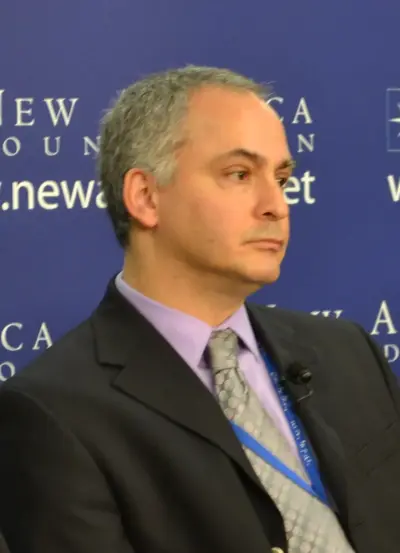
Benjamin Wittes is an American legal journalist and Senior Fellow in Governance Studies at the Brookings Institution, where he is the Research Director in Public Law, and Co-Director of the Harvard Law School–Brookings Project on Law and Security. He works principally on issues related to American law and national security. Along with Robert M. Chesney and Jack Goldsmith, Wittes cofounded the Lawfare Blog. Wittes is also a member of the Hoover Institution's Task Force on National Security and Law. Wittes is a frequent speaker on topics of detention, interrogation, and national security, before academic, government, policy, and military audiences. He also co-hosts the Rational Security podcast.
