Euripides Quotes
To die with glory, if one has to die at all, is still, I think, pain for the dier.


These “benefits” as well as males getting 72 virgins are constantly told to young and impressionable Muslims, some of whom take it so literally that they become suicide bombers. They actually believe that blowing themselves up feels only like the sting of a mosquito. This sales pitch for suicide bombers and other martyrs is also effective because with the poor education, high unemployment, and few political and civil rights, most young Arab males have no other way of obtaining “honor, dignity, and respect.”


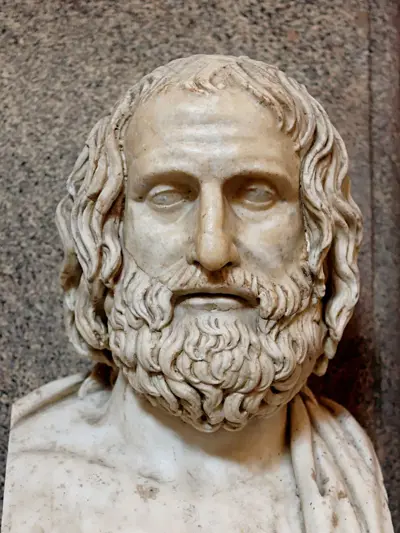
Euripides (/jʊəˈrɪpɪdiːz/; Greek: Εὐριπίδης Eurīpídēs, pronounced [eu̯.riː.pí.dɛːs]; c. 480 – c. 406 BC) was a tragedian of classical Athens. Along with Aeschylus and Sophocles, he is one of the three ancient Greek tragedians for whom any plays have survived in full. Some ancient scholars attributed ninety-five plays to him, but the Suda says it was ninety-two at most. Of these, eighteen or nineteen have survived more or less complete (Rhesus is suspect). There are many fragments (some substantial) of most of his other plays. More of his plays have survived intact than those of Aeschylus and Sophocles together, partly because his popularity grew as theirs declined—he became, in the Hellenistic Age, a cornerstone of ancient literary education, along with Homer, Demosthenes, and Menander.
