William Shakespeare Quotes
Tis not the many oaths that make the truth; But the plain single vow, that is vow'd true.
Shakespeare, William. All's Well That Ends Well. Edited by Barbara A. Mowat and Paul Werstine, Simon & Schuster, 2001.

This view almost got him killed. It was customary to swear loyalty to the government and those that would not were perceived to be traitors. The logic was that Christians feared for their souls more so than their lives so would not swear falsely. If there was no swearing, how was loyalty to be determined?


When Billy Carter ran for mayor of Plains, GA, he predicted:

Often invoked by religious persons in courts as a justification for not swearing on a Bible and in opposition to loyalty or other oath requirements.

The quotation per se has no historical or political value except that is shows is that there was overt discrimination against Muslims in China in that era. Although there always have been large numbers of Muslims in China, there are few who have ever ascended to major leadership positions, under the late Emperors, under the Chinese Republic, or under the Communist Chinese regime. The graphic is a memorial to the General.


There was a legal requirement that all cadidates for the parliament had to sign before the election an oath swearing to take their seat if elected to close off the possibility that some would cripple the parliament by winning but not taking their seats. De Valera wanted to run, and fully intended to take his seat, but had promised to sign no oaths about the parliament elections. On the last day possible, he went to the election clerk who gave him a piece of paper with the oath printed on the top and below it, the lines for candidate signatures. De Valera took a blank piece of paper and covered the oath but leaving the signature line exposed. He then signed the line and made sure that the clerk would remember that he has not signed an oath, but had signed a blank piece of paper where the oath could not be seen. To him this was a very important distinction but if failed to convince most other Irishmen.


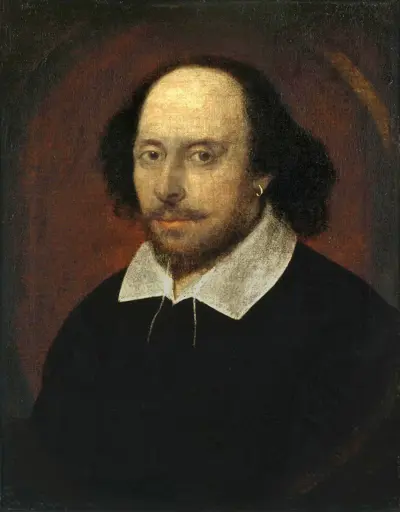
William Shakespeare was an English playwright, poet, and actor, widely regarded as the greatest writer in the English language and the world's greatest dramatist. He is often called England's national poet and the "Bard of Avon" (or simply "the Bard"). His extant works, including collaborations, consist of some 39 plays, 154 sonnets, three long narrative poems, and a few other verses, some of uncertain authorship. His plays have been translated into every major living language and are performed more often than those of any other playwright. They also continue to be studied and reinterpreted.
