Horatio Alger Quotes
Thus the castle of each feudal chieftain became a school of chivalry, into which any noble youth, whose parents were from poverty unable to educate him to the art of war, was readily received.
Alger, Horatio, Jr. "Chivalry." Gleason's Pictorial Drawing-Room Companion, vol. 6, no. 2, F. Gleason, 14 Jan. 1854, p. 23.

Chivalry was a set of rules that regulated the behavior of knights especially as to their behavior in battle. It was the Medieval equivalent of the Geneva Convention. At the time knights fought against knights and peasants fought against peasants. After time the fighting was mixed. Previously, if a knight was subdued by other knights, he would surrender and promise to fight any more and that would be honored. But when a small group of peasants brought down a knight in armor, he could not surrender. He had probably killed other lightly armored peasants who were friends, and the peasants did not trust the knights. So typically, the peasants just killed the fallen knight. Social class determined the concepts of honor, fairness, trust, and chivalry came to an end.


This required much of the population to maintain and bear arms. Another part of the law required the arms-bearers to be at the service of the king and as such was the king's militia.


William the Conqueror. Harold II was chosen as king of England after the death of Edward the Confessor, however, his claim was disputed by Duke William of Normandy
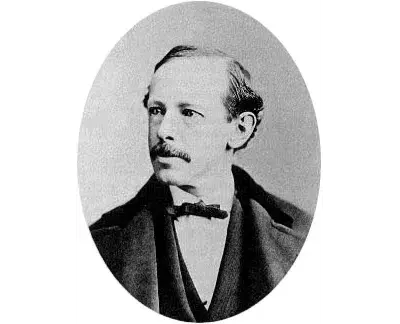
Horatio Alger Jr. was an American writer of young adult novels about impoverished boys and their rise from humble backgrounds to lives of middle-class security and comfort through good works. His writings were characterized by the "rags-to-riches" narrative, which had a formative effect on the United States during the Gilded Age.
