Johann Gottlieb Fichte Quotes
Those who speak the same language are joined to each other by a multitude of invisible bonds by nature herself, long before any human art begins; they understand each other and have the power of continuing to make themselves understood more and more clearly; they belong together and are by nature one and an inseparable whole
At the time Berlin was occupied by the French under Napoleon.
Johann Gottlieb Fichte, 17621814, German Philosopher and Reformer, Thirteenth Address To the German Nation, 1806
Sourced by: Eigen's Political and Historical Quotations


This speech to over 100,000 people galvanized the Indian nationalists They had been asking the British to change the constitution to give India more independence. Churchill was opposed to any policy that would diminish the British Empire, but needed the Indians as men of India served in the British Army in every major theater of WWII. So instead of saying "No" Churchill held out the possibility but at a later time. He argued that it was inopportune to alter the Constitution in the midst of a world war.


Many of the workers never returned.


The U. S. Patent and Trademark Office refused to grant a trademark on the grounds that it was "scandalous" and "shocking."
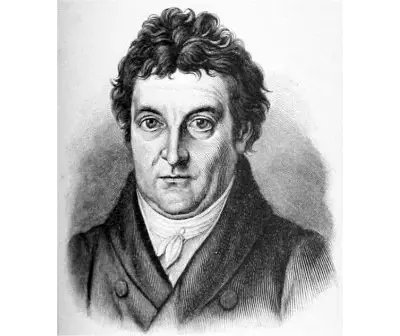
Johann Gottlieb Fichte was a German philosopher who became a founding figure of the philosophical movement known as German idealism, which developed from the theoretical and ethical writings of Immanuel Kant. Recently, philosophers and scholars have begun to appreciate Fichte as an important philosopher in his own right due to his original insights into the nature of self-consciousness or self-awareness. Fichte was also the originator of thesis–antithesis–synthesis, an idea that is often erroneously attributed to Hegel. Like Descartes and Kant before him, Fichte was motivated by the problem of subjectivity and consciousness. Fichte also wrote works of political philosophy; he has a reputation as one of the fathers of German nationalism.
