Margaret Mead Quotes
Those social behaviors which automatically preclude the building of a democratic world must go - every social limitation of human beings in terms of heredity, whether it be of race, or sex, or class. Every social institution which teaches human beings to cringe to those above and step on those below must be replaced by institutions which teach people to look each other straight in the face.
Mead, Margaret. And Keep Your Powder Dry: An Anthropologist Looks at America. William Morrow, 1942, p. 238.

Douglas was appealing to the racist crowd in Galesburg by showing that Lincoln actually believed in Racial Equality. This technique was used be racist politicians—since then and in a few places of the South even into the 21st century.


The issue of slavery which had been suppressed in Congress for the first decades of the nation broke out when Missouri statehood was considered. By previous agreement, slavery was not even discussed in Congress but the time period elapsed. Tallmadge not only proposed that no more slaves could come into Missouri {613176} but most shocking to the Southerners was that every person born in the new state would be free at the age of 25. In a generation, there would be no more slavery in Missouri and there would be no economic compensation for slave owners at all. The House of Representatives accepted the amendment, but it failed in the Senate. At that time, Senators were not elected by voters but were appointed by the state legislators and the Southern slave states had a disproportionate share of the senate from a population point of view. But what this quotation shows clearly that a majority of the country in 1819 were opposed to slavery and were willing to end it without compensation.


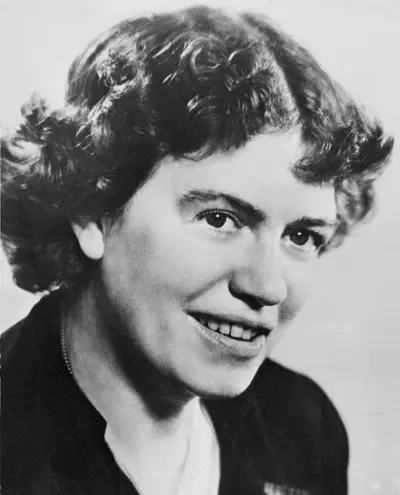
Margaret Mead was an American cultural anthropologist who featured frequently as an author and speaker in the mass media during the 1960s and 1970s. She earned her bachelor's degree at Barnard College in New York City and her MA and PhD degrees from Columbia University. Mead served as President of the American Association for the Advancement of Science in 1975.
