Niccolo Machiavelli Quotes
…those are called gentlemen who live idly in abundance from the returns of their possessions without having any care either for cultivation or for other necessary trouble in living. Such are pernicious in every republic and in every province, but more pernicious are those who, beyond the aforesaid fortunes, command from a castle and have subjects to obey them.
Niccolo Machiavelli, 1469-1527, Florentine statesman and political philosopher, Discorsi
Sourced by: Eigen's Political and Historical Quotations


Essentially, she was telling all the political forces that they were in the wrong and had to compromise. One could not tell the King, Louis XIV, that he was wrong at that time and place, so she told him that he was poorly advised, but everyone, including the king knew what she meant.

Salisbury was a brilliant, effective prime minister, but he was a snob and not a democrat. See {639131}.

What is fascinating about this quotation is that England itself was an aristocracy with a monarchy and very few elements of fairness and equality. The aristocracy and the monarch very much used the system and the common people for their benefit. However, the degree of abuse and tyranny and absence of any sense of equity, shocked even this English aristocrat. Behoof was a Middle English word derived from words that mean to profit from. By the time he used it, it meant benefit or advantage—a slightly wider meaning, but even in 1591 it was not a commonly used words but one used more by the intelligentsia of the day.


At the time the Puerto Rican right wing distrusted the United States as too accommodating to labor, and the leftists saw American progressivism as a way of building an alliance between Puerto Rican and American labor movements.

Ingersoll was considered to be the greatest orator and political thinker of his day, but his overt atheistic views curtailed his elected political career.


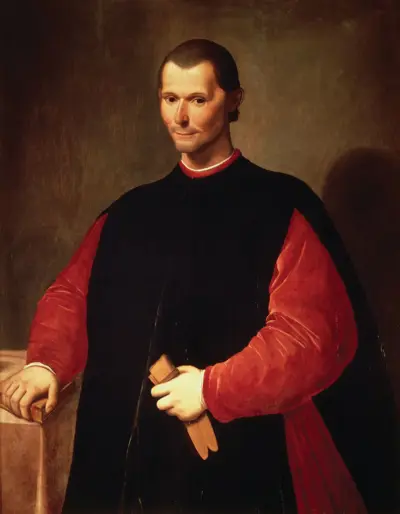
Niccolò di Bernardo dei Machiavelli was an Italian Renaissance diplomat, philosopher and writer, best known for The Prince (Il Principe), written in 1513. He has often been called the father of modern political philosophy and political science.
