Jill Stein Quotes
This is where the question always come up, "Aren't you going to split the vote?" To which the obvious answer is: Well let's just rank peoples' choices. This is a voting system we use across the country, from San Francisco to Portland, Maine, and the Twin Cities. It's used very successfully in single-office elections like mayor. It could be used for governor.
Stein, Jill. "Green Party Town Hall." CNN, Cable News Network, 17 Aug. 2016.


Jefferson thought that the possibility that a man could become President even though more Americans voted for his opponent was undemocratic and a great flaw in our Constitution. It has actually happened several times and each time the Electoral College debate renewed, but there has never been enough concern to produce a Constitutional Amendment.


Florida’s vote counting system was extremely primitive and highly subjective, and no one could really ever tell whether Al Gore or George W. Bush ever won the state whose electoral votes determined the election of 2000. The Supreme Court finally decided that Bush would be president, but no one wanted such a situation to ever happen again. Blackwell had better technology in Ohio in the next election but Ohio various techniques were used to keep some Blacks from voting.


This was the classic, historical argument the Fascists made to justify their take over of democratic societies; the argument made by every military junta that illegally seized power; by Julius Caesar when he took control of Rome.


Despite his warning---and that of others—all that they could get agreement upon had each of these three weaknesses. After winning the American Revolution, the new country found the Articles of Confederation and the Continental Congress completely inadequate and finally in 1787 there was a Constitutional Convention held in secret in Philadelphia to overcome the weaknesses of the existing structure of which the warnings of Rush were three of the problems that had to be fixed.


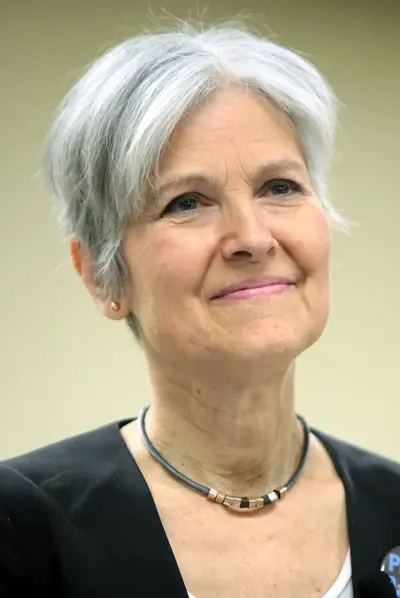
Jill Ellen Stein is an American physician, activist, and former political candidate. She was the Green Party's nominee for President of the United States in the 2012 and 2016 elections and the Green-Rainbow Party's candidate for governor of Massachusetts in 2002 and 2010. During her campaigns for President, she campaigned on the theme of a Green New Deal which included a number of reforms to address climate change, income inequality as well as civil and political rights reform. In 2012, Stein was on the ballot in 37 states and received 469,501 votes (0.36% of the popular vote). In 2016, she was on the ballot in 45 states and received 1,457,216 votes and 1.07% of the popular vote.
