Lyndon B. Johnson Quotes
This is not Johnson's war. This is America's war. If I drop dead tomorrow, this war will still be with you.

He assumed the speakership at a time of bitter partisanship in Congress and the country much like the beginning of the 31st century. Randall, however put a stop to much of it in the House of Representatives.


LBJ was depressed and thinking of not running for re-election.


The King was asking for volunteers for the British Army. What is particularly interesting about this quote is the overt appeal to “men of all classes.” This illustrates that there was an extensive class system then operational in Britain. Almost all people knew to which class they belonged. A very popular King could then make a statement like this and no one was critical of his referring to citizens by class distinctions. Even in modern times, Britain is a more class conscious society than America. The response to this appeal was very good, but the First World War developed in such a way that huge manpower resources were needed and the King had to reluctantly assent to a military draft 7 months later.

War had broken out in Europe and Jefferson enumerated a series of actions so that the United States would remain neutral. He was concerned that individual Americans would partake in foreign wars and then be captures of have to be ransomed or would give offence to some other nation who would assume that the American was acting with government approval and was allied with an enemy. The issue of American mercenaries fighting in foreign conflicts has been controversial ever since.

He was announcing the fall of France, and the start of the Battle of Britain. And that was their finest hour.


As an educational and military leader, he saw the importance of each in a nation’s welfare.

Annan had asked UN nations to contribute troops but few would.


In one of the earliest calls to revolution, the adage of Aesop found a new expression.


He drove the British into the sea when no one expected that outcome.


“Removal” was interpreted by some as killing and by others as jailing. Complaining about wartime suffering or hardship was a crime in militaristic Japan.

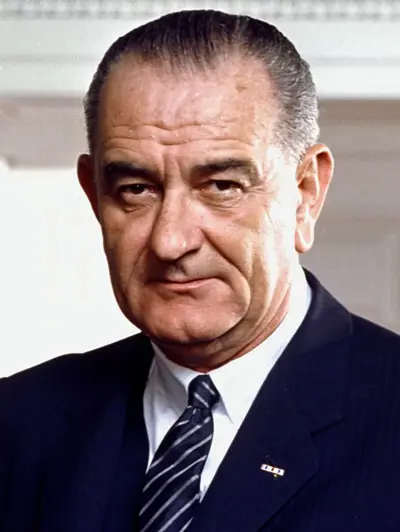
Lyndon Baines Johnson, often referred to by his initials LBJ, was the 36th president of the United States, in office from 1963 to 1969. He served as the 37th vice president from 1961 to 1963 and assumed the presidency following the assassination of President John F. Kennedy. A Democrat from Texas, Johnson was also a United States representative and later majority leader in the United States Senate. Johnson is one of only four people to have served, at various times, in all four federal elected positions.
