Joseph Stalin Quotes
This is impossible to predict. War may break out unexpectedly.
Stalin, Joseph. "Interview Between J. Stalin and Roy Howard." Works, vol. 14, Red Star Press, 1978, p. 133.


The first Bishop in Britain, sent by Pope Gregory in 597. This was in large part fulfilled in 607 when Ethelfrith led Saxon troops to Wales killing many including 200 priests who had been sent to pray for the Welsh.

Prior to whites settling in America, various Indian tribes had a long history of fierce fighting for control of Kentucky. The Transylvania Land company negotiated for the “rights” to Kentucky. Dragging Canoe, who opposed the treaty, argued that the land had a bad history and would be very difficult to settle. Poet Theodore O’Hara described Kentuckians as “Sons of the Dark and Bloody Ground” in his poem, The Bivouac of the Dead.

At the time 18 year old Douglas wanted to enlist to fight in the Philippines where his father was about to be given military command. Young Douglas took his father’s prescient advice and attended West Point instead. In an amazing historical precursor, General Arthur MacArthur ended up in policy disputes with the President over how aggressive American tactics should be. President Taft relieved MacArthur of his command.


The general was expressing a principle that is believed to this day by many policy makers, military people and civilians: Once a war has begun, one must not stop it until victory has been attained. It is unacceptable to negotiate an end to hostilities unless the enemy has been badly beaten on the battlefield. There is this view that “honor” would be lost and that enemies and even allies will not respect you and think the nation is weak and fearful. So there would always be extensive pressure to keep on fighting and not negotiate until there is a military dominant position.
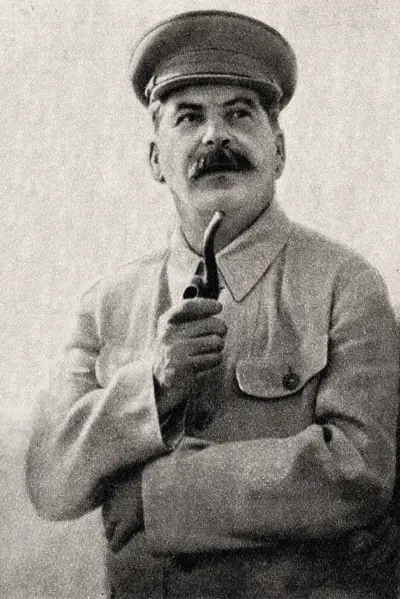
Joseph Vissarionovich Stalin was a Georgian revolutionary and the ruler of the Soviet Union from 1927 until 1953. He served as both General Secretary of the Communist Party of the Soviet Union (1922–1952) and Chairman of the Council of Ministers of the Soviet Union (1941–1953). Despite initially governing the country as part of a collective leadership, he ultimately consolidated power to become the Soviet Union's de facto dictator by the 1930s. A communist ideologically committed to the Leninist interpretation of Marxism, Stalin formalized these ideas as Marxism–Leninism while his own policies are known as Stalinism.
