William Wells Brown Quotes
This is called 'the land of the free and the home of the brave'; it is called the 'asylum of the oppressed,' and some have been foolish enough to call it the 'Cradle of Liberty.' If it is the 'Cradle of Liberty,' they have rocked the child to death.
Brown, William Wells. A Lecture Delivered Before the Female Anti-Slavery Society of Salem, at Lyceum Hall, Nov. 14, 1847. Massachusetts Anti-Slavery Society, 1847, p. 6.


Webb’s opponent had accused him of not being patriotic because he opposed many of President George W. Bush’s Iraq War policies. This technique of publicly intimating that an opponent was not patriotic because he opposed the hawkish proposals of the President, had worked very well for the Republicans before. Presidential Candidate John Kerry, a decorated war hero, was attacked and remarkably Senator Max Cleland who had lost three of his four limbs in battle was unseated by attacking his patriotism. When Senator George Allen, fighting for reelection, used the technique on Webb, Web responded much more aggressively than earlier Democrats had when faced with the accusation. Senator Allen, like most of the patriotism critics of heroic veterans, had never been in combat.

Trumbo was morally opposed to war. He also refused to name Hollywood communists to Congressional Committees during the Red Scare. He was then blacklisted from his occupation, screen writing.


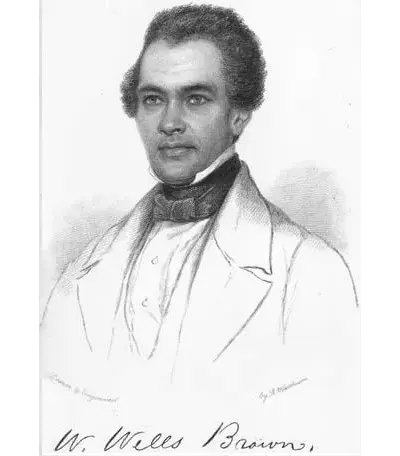
William Wells Brown was a prominent African-American abolitionist lecturer, novelist, playwright, and historian in the United States. Born into slavery in Montgomery County, Kentucky, near the town of Mount Sterling, Brown escaped to Ohio in 1834 at the age of 19. He settled in Boston, Massachusetts, where he worked for abolitionist causes and became a prolific writer. While working for abolition, Brown also supported causes including: temperance, women's suffrage, pacifism, prison reform, and an anti-tobacco movement. His novel Clotel (1853), considered the first novel written by an African American, was published in London, England, where he resided at the time; it was later published in the United States.
