Doris Lessing Quotes
This is an inevitable and easily recognizable stage in every revolutionary movement: reformers must expect to be disowned by those who are only too happy to enjoy what has been won for them.
Lessing, Doris. A Ripple from the Storm. Michael Joseph, 1958.


This is not only attributed by reliable sources but apparently Roosevelt had said this on several occasions. The word “radical” has had different shades of meaning at different periods of American History. The origin of the word from the Latin means someone who wishes to change things very rapidly and not gradually. In the time of the Civil War, the majority of the Republicans proudly referred to themselves as “radicals” or “radical Republicans” because they wanted to abolish slavery immediately. In the late 19th century the word “radical” referred to anarchists. From the Russian Revolution onward “radicals” were communists who presumably wanted to change governments throughout the work through revolution—very rapid change. However, in the early 20th century, radicals were people who wanted to reform and regulate businesses and monopolies rapidly and it is this sense he was a radical. But by style, he was a radical in most things in that he wanted to change things and change them rapidly.


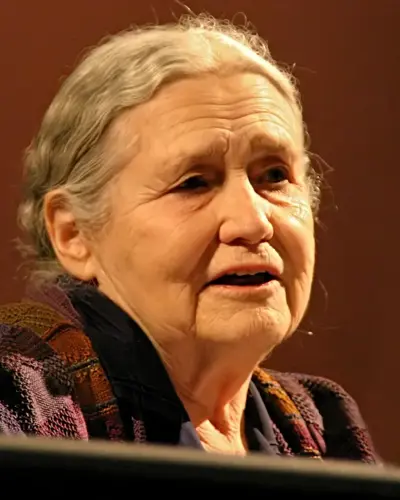
Doris May Lessing CH OMG (née Tayler; 22 October 1919 – 17 November 2013) was a British-Zimbabwean (Rhodesian) novelist. She was born to British parents in Iran, where she lived until 1925. Her family then moved to Southern Rhodesia (now Zimbabwe), where she remained until moving in 1949 to London, England. Her novels include The Grass Is Singing (1950), the sequence of five novels collectively called Children of Violence (1952–1969), The Golden Notebook (1962), The Good Terrorist (1985), and five novels collectively known as Canopus in Argos: Archives (1979–1983).
