Etgar Keret Quotes
This idea where, in this safe haven for Jews, Jews will threaten to kill other Jews, it wasn't in the brochure.
Keret, Etgar. The Seven Good Years: A Memoir. Riverhead Books, 2015.

For years of the Arab-Israeli conflict, Palestinians would never negotiate with Israel over anything. Finally that barrier was broken and, the PLO became a negotiating party with Israel. However, the terrorist organization Hamas, had challenged the PLO for political control of the Palestinians and then took over the Gaza strip—part of the Palestinian territory. They then shot thousands of rockets into Israel, a clear act of war under international law. The Israelis then attacked the Hamas infrastructure and any building of facility where they had command or communications, meetings, trainings or stored weapons or ammunitions. The Gazans suffered many more casualties than the Israelis—about 20 to 1 ratio. Many other countries tried to broker a ceasefire which the Israelis agreed to but Hamas would not. The Israeli ambassador was asked on American television if Israel would be willing to negotiate on the larger issues of the conflict as they had negotiated with the PLO. This was his reply. The major problem was that the Hamas Charter had two clauses that made negotiations impossible. Hamas was committed to the destruction of Israel and would not agree that the Israel had a right to exist. Second, the Hamas charter called for the killing of Jews anywhere in the world—men, women and children. The Israelis asked what they would negotiate about given those two charter items and the Hamas terror history in killing as many Israelis as they could.


ISIS and other terrorist organizations were using these platforms for propaganda, and recruiting. See {36908}, {36909}, and {36911} for the views of the companies who Carlin claimed were being exploited. See {583142} for the message Carlin believed that was being transmitted.


The threat was if Pakistan did not cooperate with the United States after the September 11 attack. Pakistan was full of Islamic fundamentalists with strong ties to the Taliban and other terroristsw. Pakistan did cooperate as a government but the Musharraf government itself was under attack by the Islamic Fundamentalists who tried to assassinate Musharraf a number of times. Armitage has denied that he said such a thing, but he does admit a conversation where he told them that “they were with us or against us.”

The moral imperative of submission rather than allowing a war started by the aggressor, logical for Pizarro and Church leaders of the time, is the same logic of aggressors from Adolf Hitler to Saddam Hussein.


He controlled a Shiite political party with its own armed militia.

The Lebanese Prime Minister had been assassinated with most Lebanese thinking that the Syrians were behind the murder. All the political parties in Lebanon called for a UN Tribunal to investigate the assassination. As the Tribunal was ending its investigation, word leaked out that the report would name Lebanese Hezbollah operatives as being involved in the assassination. If that happened, the Lebanese government and army would have the obligation to arrest the murders for trial and Lebanon would be split against Hezbollah which was the most powerful and militant political group as well as being a terrorist group. Hezbollah declared that they would not allow any arrests of their people, and that they wanted the Government, led by the murdered politicians son to repudiate the UN Tribunal even before the report was issued. When that failed, Hezbollah withdrew from the government coalition and reconstituted a government without the son of the murdered Prime Minister who was then thrown out of office. Jumblatt’s Druze party held the balance of power and surprisingly sided with Hezbollah. Usually he was a strong advocate for justice. However, if he refused to go along with Hezbollah, they would use their terror troops against the Lebanese army and civil war would result. Hence Jumblat’s answer—a classic statement of a political dilemma.
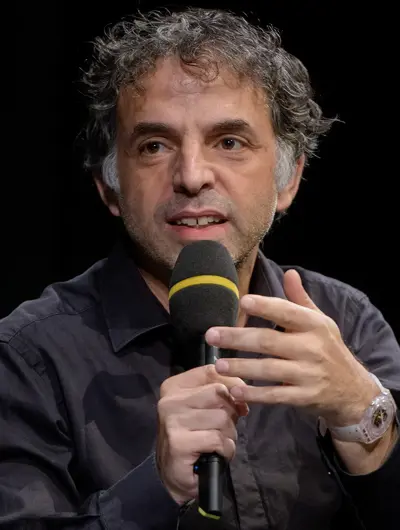
Etgar Keret is an Israeli writer known for his short stories, graphic novels, and scriptwriting for film and television.
