Albert Claude Quotes
This familiarity with a respected physician and my appreciation of his work, or the tragedy I experienced with the long, tormented agony and death of my mother might have influenced me in wanting to study medicine. It was not the case.
Claude, Albert. "Albert Claude - Biographical." Les Prix Nobel en 1974, edited by Wilhelm Odelberg, Nobel Foundation, 1975.


Sarah Palin, former Republican Governor of Alaska, coined a new term when she charged that proposed Health Care legislation would create a "death panel" See Palin Quotation 644138. It was an absolute lie totally made up by Palin. However a number of conservative members of Congress then repeated the prevarication in Congressional Debate and elsewhere. One poll showed that after it spread, about 85% of respondents were familiar with the charge and of those who were familiar with it, about 30% thought it was true and Palin's new term won the dubius distinction of winning the "Lie of the Year" award. Despite the fact that it was totally false, in order to win Obamacare be a single vote, the President had to eliminate the part of the bill that allowed payment to physicians to take the time and explain to patients and/or their families, the various options of palliative treatment during the last months of life. Many people thought that the doctors would form death panels.


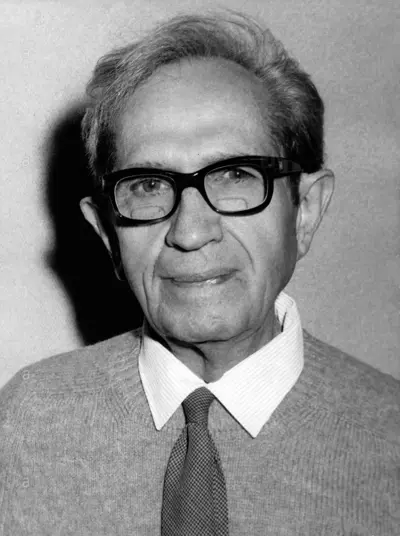
Albert Claude was a Belgian-American cell biologist and medical doctor who shared the Nobel Prize in Physiology or Medicine in 1974 with Christian de Duve and George Emil Palade. His elementary education started in a comprehensive primary school at Longlier, his birthplace. He served in the British Intelligence Service during the First World War, and got imprisoned in concentration camps twice. In recognition of his service, he was granted enrolment at the University of Liège in Belgium to study medicine without any formal education required for the course. He earned his Doctor of Medicine degree in 1928. Devoted to medical research, he initially joined German institutes in Berlin. In 1929 he found an opportunity to join the Rockefeller Institute in New York. At Rockefeller University he made his most groundbreaking achievements in cell biology. In 1930 he developed the technique of cell fractionation, by which he discovered the agent of the Rous sarcoma, components of cell organelles such as mitochondrion, chloroplast, endoplasmic reticulum, Golgi apparatus, ribosome and lysosome. He was the first to employ the electron microscope in the field of biology. In 1945 he published the first detailed structure of cell. His collective works established the complex functional and structural properties of cells.
