Rodney Frelinghuysen Quotes
This corridor is important to national security and important to the whole Northeast. So it's not just our own New Jersey transportation needs: it's the whole rail corridor here we're talking about.


It was on time and on budget. It is hard to imagine that we could complete a project this large today. It would take more than 8 years to do the studies and get the permits and fight off the lawsuits. However, the engineering feat for the up and coming young country was as Clinton said, “unparalleled in the experience of mankind.” America had already exceeded the Ancient Egyptians, the Europeans, the Chinese. The economic development for the young nation was enormous—as big as the digital revolution almost two centuries later.

It (the proposal to build the Erie Canal) is a splendid project and may be executed a century hence.
Jefferson was usually far in advance of most men in his understanding of science and technology. However, he missed the boat literally and figuratively on this project. He did not think that the technology and engineering of the day were sufficient to complete such a huge a complicated project. His experience in the South was that large projects would require large numbers of slaves who had to do highly technical work that was also very challenging physically. The great problem was that the New York area was filled with huge, deep rooted trees. The canal would have to wind around the giant trees and still be navigable. This was a case where Jefferson’s Southern insularity hampered him. He did not count on two things: First was the engineering technology of New York where there were very few slaves and labor saving technology was valued and well developed. New York engineers had huge horse powered machines that could remove the stumps of the largest trees in less than an hour. The Erie Canal would not go around the large trees but straight through the forest shortening the canal digging substantially. Second, he did not realize what free Irish labor was capable of in terms of productivity and mixing brain and brawn. Although he rejected the idea, De Witt Clinton convinced the NY State legislature of the feasibility and the legislature appropriated the then enormous sum of $7 million. The Erie Canal was the most important development project in the nation until the railroad. New York became the richest and largest state as a result and New York City went from a medium sized city to the largest city and the largest port in the country.


Although Madison vetoed the Federal bill to improve the national infrastructure, he was very much for the improvements and he said so in this veto message. He, however, did not see the Constitutional authority for the Federal government to appropriate moneys to be spent in the States for infrastructure improvement. He was for a Constitutional Amendment to do so or to make the improvements using State money as New York did building the Erie Canal. Alexander Hamilton, and many of the Congressmen who voted for the bill disagreed (many of whom were also in the Constitutional Convention) and did not see the Constitutional limitation that Madison did. See Hamilton’s Quote 644278. He was particularly concerned that small and less affluent states could not possibly have the skill to design these or the finances to build them. Later President’s and Congresses sided with Hamilton. It would be hard to envision America today of Madison’s view had prevailed.


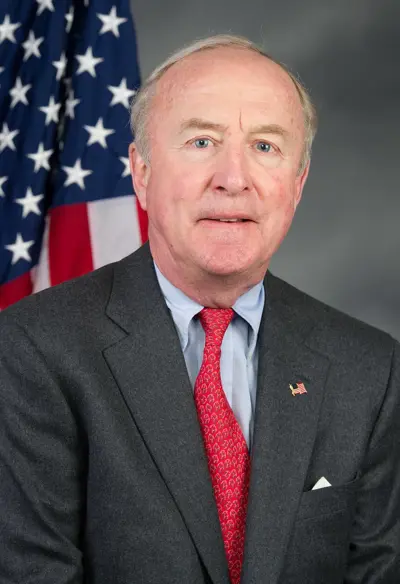
Rodney Procter Frelinghuysen /ˈfreɪlɪŋˌhaɪsən/ is an American politician who served as the U.S. Representative for New Jersey's 11th congressional district from 1995 to 2019. The district includes most of Morris County, an affluent suburban county west of New York City. It also includes some of the wealthier areas near Newark and Paterson, and is the 10th richest congressional district in the nation in terms of median income. A member of the Republican Party, Frelinghuysen served as Chair of the House Appropriations Committee from 2017 to 2019. Frelinghuysen announced on January 29, 2018, that he would not seek re-election that year.
