Book of Isaiah Quotes
They shall beat their swords into plowshares, and their swords into pruning hooks. And nation shall not take up sword against nation, and they shall not learn war any more.
Inscription on the outside front wall of the United Nations, New York City
Old Testament, Isaiah 2:4
Sourced by: Eigen's Political and Historical Quotations


Theodore Roosevelt was the Presidential nominee. Johnson was a leader of some members of Congress some of whom were extreme isolationists and some of whom were Nazi sympathizers and Hitler admirers. When the Japanese attacked Pearl Harbor later that year, Germany, fulfilling its treaty with Japan, declared war on America, Johnson’s group no longer mattered. Before WWII most Republicans were opposed to Defense Spending and accused the Democrats of being war hawks. After WWII, they flip flopped and became more hawkish than the Democrats who they accused of being soft on defense for years thereafter. See {631380} for President Roosevelt’s different view.


While Queen Mary was presenting medals to British soldiers during World War I, she said this to a soldier who had exclaimed “No more bloody wars for me”.


This idea came from Dutch Philosopher Benedict Spinoza. See his quotation from 1677.


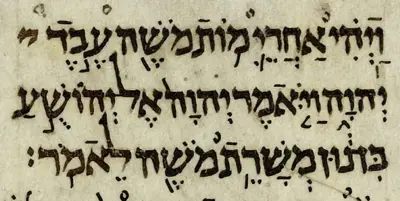
The Book of Isaiah (Hebrew: ספר ישעיהו, [ˈsɛ.fɛr jə.ʃaʕ.ˈjaː.hu]) is the first of the Latter Prophets in the Hebrew Bible and the first of the Major Prophets in the Christian Old Testament. It is identified by a superscription as the words of the 8th-century BCE prophet Isaiah ben Amoz, but there is extensive evidence that much of it was composed during the Babylonian captivity and later. Johann Christoph Döderlein suggested in 1775 that the book contained the works of two prophets separated by more than a century, and Bernhard Duhm originated the view, held as a consensus through most of the 20th century, that the book comprises three separate collections of oracles: Proto-Isaiah (chapters 1–39), containing the words of the 8th-century prophet Isaiah; Deutero-Isaiah (chapters 40–55), the work of an anonymous 6th-century BCE author writing during the Exile; and Trito-Isaiah (chapters 56–66), composed after the return from Exile. Isaiah 1–33 promises judgment and restoration for Judah, Jerusalem and the nations, and chapters 34–66 presume that judgment has been pronounced and restoration follows soon. While virtually no scholars today attribute the entire book, or even most of it, to one person, the book's essential unity has become a focus in more recent research.
