Miles Davis Quotes
They [police] do me like that all the time! "What you work for?".
Davis, Miles. Miles on Miles: Interviews and Encounters with Miles Davis. Edited by Paul Maher Jr. and Michael K. Dorr, Chicago Review Press, 2009.

The police knew she was a leftist but most didn’t really understand what that meant. In those days, police were not very well educated and many had no more than a few grades of elementary school. They were assigned to keep order at her public speeches (where there were sometimes protestors threatening violence), but the police would often erroneously assume that something she would say was illegal—freedom of speech was not what it is today. She was quite used to the harassment. Most police at the beginning of the 21st century are still generally undereducated with only a small minority being college graduates.


The NRA has not only become extremely right wing organization from its early non-partisan posture, but a few of the officers have demonstrated an anti-government paranoia that most extremists would think extreme such as this quotation. Here he is on political company with the Black Panthers, the KKK, the Aryan Nation and the most extreme of the “lunatic fringe”

Police have been exceeding their authority under the law of the land for centuries in most nations. In the century that has passed since she wrote this quotation, there have been many reforms in American law enforcement. The situation is better but many police still exceed their authority. For centuries, most politicians have not wanted to curtail or restrict the police regardless of their human rights abuses, and most citizens did not realize the extent of police abuse. Modern media policies and technology has shed much light on the problem.


There is a significant argument as to whether of not race should be used to try and predict the variables that will likely produce crimes. Some social scientists argue that virtually everything correlates with race {633357} and therefore the predictions are meaningless. Here, Kurtz argues that if you do not use race, since it does correlate with so much, then you might as well not try and determine the predictive factors of crime. Reality lies in the center, use race as one of the statistical variables but do not use it for profiling potential criminals and potential suspects unless there is observable and not deduced or inferred evidence of race in the crime.

The judge found that Blacks and Hispanics were stopped and frisked at a much higher rate than whites despite the fact that whites, when they were stopped and searched had a higher rate of carrying an illegal gun or illegal substances.


5 New York City—Staten Island--police officers were arresting a large unarmed Black man, and one of them used a “choke hold” which was against Departmental Regulations. The man cried out several times that he was having trouble breathing and he was choking, until he was choked to death. The coroner ruled that a crime had been committed and the death was a homicide. However, the Staten Island District Attorney and his Grand Jury refused to even indict the officer that did the choking. Staten Island was a very conservative, white enclave in New York City. See {642459}.

Given that the Black population is less than 15 percent of the total, the odds against this occurring by chance is less than 100 million to one. The problem was then very hard to solve in that in most cases the cause was not anti-Black hostility. Rather it was that most police—including some Black police officers—were more fearful for Black males relative to white males and perceived themselves or the public in mortal danger much more often with Blacks than with whites in similar situations. Much of this was a historical societal bias and fear of Black males and much was the result of the disproportionate media depiction of violent Black males.


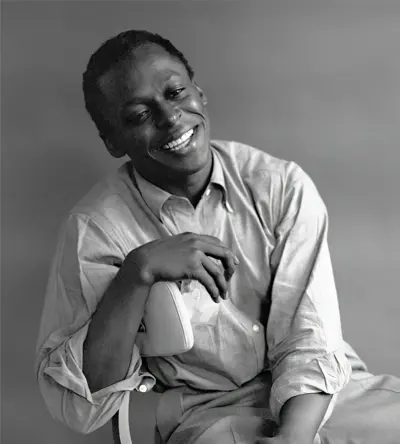
Miles Dewey Davis III was an American trumpeter, bandleader, and composer. He is among the most influential and acclaimed figures in the history of jazz and 20th-century music. Davis adopted a variety of musical directions in a five-decade career that kept him at the forefront of many major stylistic developments in jazz.
