Almamon Quotes
They are the elect of God, his best and most useful servants, whose lives are devoted to the improvement of their rational faculties
Almamon, *, Moslem Caliph, Quoted in Gibbon, Decline and Fall of the Roman Empire
Sourced by: Eigen's Political and Historical Quotations

Not all churches at all times have been hostile to science. Here is an example where science is urged as a source of knowledge along with history and prophesy and the word of God.


Only six years later, the University was intellectually and politically split asunder when the prestigious chairman of the Geology Department wrote that the fossil record was at variance with the date the church had ascribed to Adam and Eve. Vanderbuilt was then controlled by the Tennessee Methodist Episcopal whose Bishop served as its President. See {612709} and {612831}.

Unfortunately, much modern Islamic philosophy and religion sees new knowledge and innovation of ideas as heresy. However, this was not at all true at the beginning of Islam. This narrow-mindedness and intolerance began to develop in 1100, hundreds of hears after Mohammad. Contrast Abu Hanifa with an Islamic modern fundamentalist who claims there can be no valid new knowledge: {620307}.


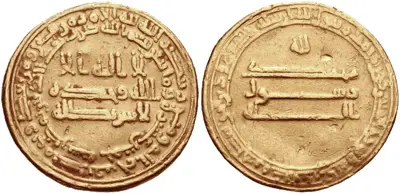
Abu al-Abbas Abdallah ibn Harun al-Rashid, better known by his regnal name al-Ma'mun (Arabic: المأمون, romanized: al-Maʾmūn), was the seventh Abbasid caliph, who reigned from 813 until his death in 833. He succeeded his half-brother al-Amin after a civil war, during which the cohesion of the Abbasid Caliphate was weakened by rebellions and the rise of local strongmen; much of his domestic reign was consumed in pacification campaigns. Well educated and with a considerable interest in scholarship, al-Ma'mun promoted the Translation Movement, the flowering of learning and the sciences in Baghdad, and the publishing of al-Khwarizmi's book now known as "Algebra". He is also known for supporting the doctrine of Mu'tazilism and for imprisoning Imam Ahmad ibn Hanbal, the rise of religious persecution (mihna), and for the resumption of large-scale warfare with the Byzantine Empire.
