H. G. Wells Quotes
There will be little drudgery in this better ordered world. Natural power harnessed in machines will be the general drudge. What drudgery is inevitable will be done as a service and duty for a few years or months out of each life; it will not consume nor degrade the whole life of anyone.


His 50 year prediction was a little too optimistic although a large percentage of the routine, and some non-routine, jobs had become automated especially in the automobile and other manufacturing arenas, and many other fields. But there were still some other jobs that were still being done without machines in 2014. Asimov was essentially right but a little early in his timing.


We think of jobs being eliminated when technology is employed as a modern problem. But here, in 1936, automation was eliminating jobs rapidly. One fascinating difference is that Mrs. Roosevelt observes that the laborers jobs are eliminated and the high school and college graduates can run the enterprise. 75 years after this quotation, the jobs of the high school graduates were being eliminated and some higher education was necessary for most jobs. As technology improves, the workers who are necessary require more and more education.


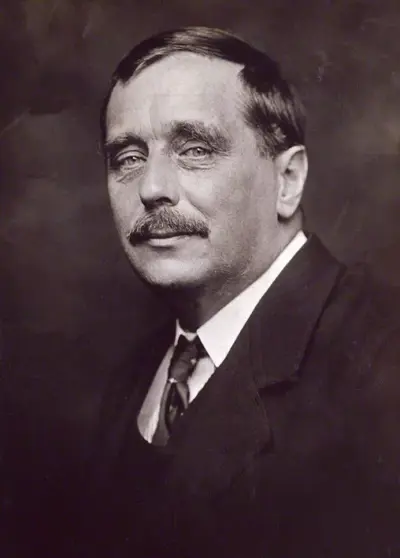
Herbert George Wells —known as H. G. Wells—was a prolific English writer in many genres, including the novel, history, politics, social commentary, and textbooks and rules for war games. Wells is now best remembered for his science fiction novels and is called a "father of science fiction", along with Jules Verne and Hugo Gernsback.[a] His most notable science fiction works include The Time Machine (1895), The Island of Doctor Moreau (1896), The Invisible Man (1897), and The War of the Worlds (1898). He was nominated for the Nobel Prize in Literature four times.
