Robert M. Gates Quotes
There will be boots on the ground if there's to be any hope of success in the strategy.
Gates, Robert M. Interview by Charlie Rose. CBS This Morning, CBS, 17 Sept. 2014.


Kentucky was a slave state but public opinion was not clearly in favor of secession. Governor Magoffin was a Southern sympathizer and wanted Kentucky to secede with the other slave states. However, the education level of Kentucky was greater than those of the deep South and the State Legislature and many Union patriots were generally pro Union. Only 16% of Kentucky were slaves. The economy of Kentucky was much more involved with the Northern States than the other Southern states. The legislature rebuffed the Governor’s call for a secession convention. Then Magoffin demanded that President Lincoln remove the Federal Troops that had been stationed in Kentucky. Lincoln did not want the Southern forces to occupy Kentucky and then use their occupation to pressure the State into joining the confederacy. Also, Lincoln took the position that as long as Kentucky was a state of the United States, they were obligated to assist in putting down the rebellion. At this time, the Kentucky Congressional Delegation was overwhelmingly pro Union, as was the new State legislature which had such a pro-Union majority that they could override the Governor’s veto. Less than two weeks later, September 4, 1861, Confederate Major General Leonidas Polk tried to occupy Kentucky as Lincoln had feared, and the Legislature asked the Federal Government to send more troops and eject the Southern forces from the South of Kentucky. Kentucky Confederate sympathizers formed a rump government and voted to secede, and despite Jefferson Davis’s concerns that the State Legislature was being bypassed, Kentucky was accepted in the Confederacy. The result was that there were Kentucky military units in the Confederate Army and in the Union Army with the latter being in the majority. Kentucky was on both sides. This delicate balance and that of Maryland was why Lincoln did not include those states in his Emancipation Proclamation.

ground troops fighting in Iraq & Syria in addition to air power Quote A was made in June of 2014. Quote B, 3 months later in September. In June there are rumors that the Obama administration might commit more military assets to the situation in Iraq and Syria and Graham was afraid that the President might be considering ground troops. Three months later, President Obama announced a policy of making a serious military commitment to the area, but stated that he would not be using ground troops. Graham then criticized the President for NOT deploying ground troops reversing his previous position. This is a marvelous example of the hyper partisanship and the virulent anti-Obama action by the Republicans. Actually, Graham was better than most of the Republicans. He was always polite. He criticized the President’s policies and actions even if he had to twist around to do it. Many of his colleagues made vicious personal attacks on the President and kept spreading rumors that he was not a Christian but a Muslim who was not born in America and was indoctrinated in Islam as a boy. Graham’s flip flop was explained by him as a change that was made necessary by the rise and military aggression of ISIS which he also blamed on the President for not committing more resources to the Syrian insurgents.


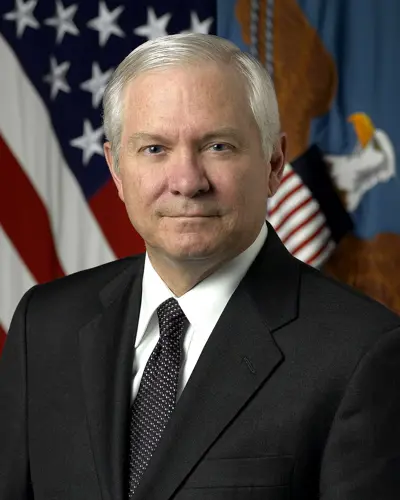
Robert Michael Gates is an American intelligence analyst, and university president who served as the 22nd United States secretary of defense from 2006 to 2011. He was originally appointed by President George W. Bush and was retained for service by President Barack Obama. Gates began his career serving as an officer in the United States Air Force but was quickly recruited by the Central Intelligence Agency (CIA). Gates served for 26 years in the CIA and the National Security Council, and was Director of Central Intelligence under President George H. W. Bush. After leaving the CIA, Gates became president of Texas A&M University and was a member of several corporate boards. Gates served as a member of the Iraq Study Group, the bipartisan commission co-chaired by James A. Baker III and Lee H. Hamilton, that studied the lessons of the Iraq War.
