Barbara Ehrenreich Quotes
There seems to be no stopping drug frenzy once it takes hold of a nation. What starts with an innocuous HUGS, NOT DRUGS bumper sticker soon leads to wild talk of shooting dealers and making urine tests a condition for employment -- anywhere.
Ehrenreich, Barbara. The Worst Years of Our Lives: Irreverent Notes from a Decade of Greed. Pantheon Books, 1990, p. 20.


Explaining why he wants alcohol-ad warnings in all alcohol ads:


There are great differences in the law enforcement policies throughout the country. Even when marijuana was illegal in every state, there were gret differences in the vigor with which this illegality was enforced. And local cities, towns and counties also are different. In the case of Pueblo marijuana was illegal in his childhood but the local authorities chose not to enforce those laws. Even within the same city or town there are often differential enforcement policies for different neighborhoods very ften. Also some communities have a strong libertarian viewpoint and there has been a reluctance to enforce lws relating to personal life choices.
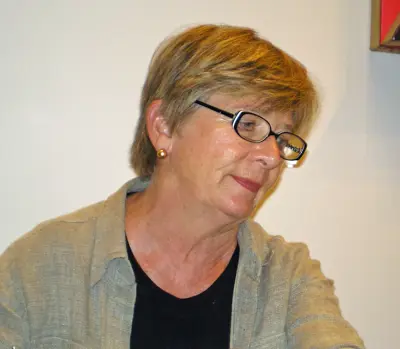
Barbara Ehrenreich is an American author and political activist who describes herself as "a myth buster by trade" and has been called "a veteran muckraker" by The New Yorker. During the 1980s and early 1990s she was a prominent figure in the Democratic Socialists of America. She is a widely read and award-winning columnist and essayist, and author of 21 books. Ehrenreich is perhaps best known for her 2001 book Nickel and Dimed: On (Not) Getting By in America. A memoir of Ehrenreich's three-month experiment surviving on minimum wage as a waitress, hotel maid, house cleaner, nursing-home aide, and Wal-Mart clerk, it was described by Newsweek magazine as "jarring" and "full of riveting grit," and by The New Yorker as an "exposé" putting "human flesh on the bones of such abstractions as 'living wage' and 'affordable housing'." She is a recipient of a Lannan Literary Award.
