John F. Kennedy Quotes
There is, of course, a legitimate argument for some limitation upon immigration. We no longer need settlers for virgin lands, and our economy is expanding more slowly than in the nineteenth and early twentieth centuries.
Kennedy, John F. A Nation of Immigrants. Harper & Row, 1964, p. 77.


The railroads that opened up the West are often used as examples of American corporate and entrepreneurial achievement. But private enterprise would not risk the capital for such a visionary and innovative scheme. It was the Federal Government which provided loans to start and paid for every mile of track with huge grants of land along the right of way. Then the Federal government provided the security and conducted numerous wars against the Indians to make the construction and operation possible. Had the Government and President Lincoln not pushed and supported the plan, there would have been no transcontinental railroad.


Congress was debating the Naturalization Act of 1790. Laurance and many others (see {616376}) argued that there should be no qualification requirements on immigrants as every person coming to America added to the strength of the nation. Congress reached a compromise between those who favored unlimited naturalization and citizenship and those who wanted heavy restrictions. It required a 2 year residence, a certification of good character and an oath, modest by modern standards.


Most immigration reformers want to open immigration more widely. Ward wanted immigration restricted to certain ethnicities and limited. He wanted a uniformity of assimilation and not diversity.

The counter-argument given by many of the left and the right is what while they contribute, they displace American citizens from these opportunities.


Most people are very surprised that the great Benjamin Franklin was so narrow-minded at one point in his life. The German immigration almost halted during the Seven Years War, and the influx of Germans to Pennsylvania did not resume at the same rate.


Although Jefferson was a strong immigration enthusiast, he and others were concerned about the ghettoization. The early German immigrants did not universally adopt English, just as today’s immigrants do not all. This was a concern of Americans since the first immigrations. Yet it has always occurred despite concerns about it. However, the second and third generations all become fluent and literate in English.
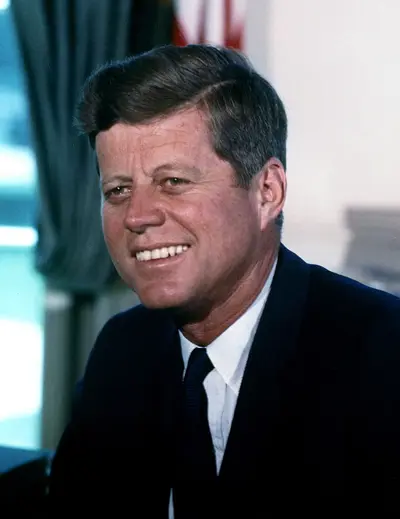
John Fitzgerald Kennedy, often referred to by his initials JFK, was an American politician who served as the 35th president of the United States from 1961 until his assassination in 1963. Kennedy served at the height of the Cold War, and the majority of his work as president concerned relations with the Soviet Union and Cuba. A Democrat, Kennedy represented Massachusetts in both houses of the U.S. Congress prior to becoming president.
