Euripides Quotes
There is nothing more hostile to a city that a tyrant, under whom in the first and chiefest place, there are not laws in common, but one man, keeping the law himself to himself, has the sway, and this is no longer equal.
Euripides. The Suppliants. Translated by E. P. Coleridge, George Bell and Sons, 1891.


Napoleon had been a great supporter of Napoleon, but had become disillusioned.

This is the argument—an essence of Fascism—of every dictator from Julius Caesar onward. See {640792} for more of his views on dictators.


Description of the Mexican Institutional Revolutionary Party (PRI) which ruled Mexico for 71 straight years.


Nine years later he was responsible for Napoleon’s election as Consul.
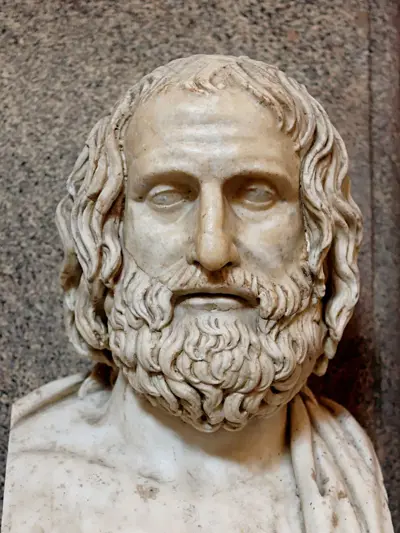
Euripides (/jʊəˈrɪpɪdiːz/; Greek: Εὐριπίδης Eurīpídēs, pronounced [eu̯.riː.pí.dɛːs]; c. 480 – c. 406 BC) was a tragedian of classical Athens. Along with Aeschylus and Sophocles, he is one of the three ancient Greek tragedians for whom any plays have survived in full. Some ancient scholars attributed ninety-five plays to him, but the Suda says it was ninety-two at most. Of these, eighteen or nineteen have survived more or less complete (Rhesus is suspect). There are many fragments (some substantial) of most of his other plays. More of his plays have survived intact than those of Aeschylus and Sophocles together, partly because his popularity grew as theirs declined—he became, in the Hellenistic Age, a cornerstone of ancient literary education, along with Homer, Demosthenes, and Menander.
