Lord Byron Quotes
There is nothing left for Mankind but a Republic.
6th Baron Byron
George Gordon Byron, 1788-1824, British Poet & Member of Parliament, Diary, 1821
Sourced by: Eigen's Political and Historical Quotations

Harding was arguing for party government. He may or may not have been right, but he was one of the weaker administers that held the American presidency. In addition he was not a particularly hard worker, and was more than willing to share any burdens.


The government relationship to people phrase, although probably Lincoln's most famous, was not totally original. John Adams came close in a 1774 proclamation. As did John Marshall in his McCulloch v. Maryland decision. Daniel Webster's Speech on Foot's Resolution was very close. as was Theodore Parker in 1850 {629578}. There was also Thomas Cooper in 1795. But the earliest appears to be John Wycliffe in 1382 {567292}. It is not known with which of these Lincoln was familiar.


Describing the concept of the House of Representatives:


When ambassador to Great Britain, he was very supportive of the British Fascists, and was an admirer of Adolf Hitler. Once war with Germany was commenced, Kennedy predicted that England would lose the war and became a fascist puppet state controlled by Germany. He opposed Lend Lease and the other efforts of the Roosevelt administration to assist England to fight off the Germans. Ironically his oldest son died in a dangerous volunteermission fighting Germany in the War. Kennedy's earlier pro-German views ended his political career and was an embarassment to his sons when they entered politics.


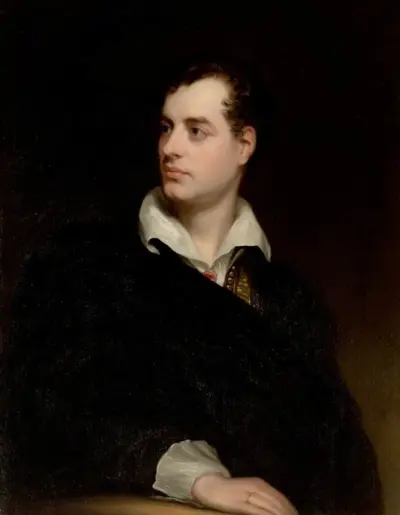
George Gordon Byron, 6th Baron Byron, FRS known simply as Lord Byron, was an English peer, who was a poet and politician. He was one of the leading figures of the Romantic movement and is regarded as one of the greatest English poets. He remains widely read and influential. Among his best-known works are the lengthy narrative poems Don Juan and Childe Harold's Pilgrimage; many of his shorter lyrics in Hebrew Melodies also became popular.
