Paul Feyerabend Quotes
There is not a single rule, however plausible, and however firmly grounded in epistemology, that is not violated at some time or other. It becomes evident that such violations are not accidental events, they are not results of insufficient knowledge or of inattention which might have been avoided. On the contrary, we see that they are necessary for progress.
Feyerabend, Paul. Against Method. Verso, 1993, p. 14.


Science has the interesting characteristic that most failures are successes in the sense that scientific knowledge is gained from the failure even if it only a guide to what not to do in the future. Politics would be well served to adopt this pragmatic approach, but ideology usually prevails in politics and errors tend to be repeated if there are supported by political philosophy or ideology.


This quotation from the great educator is frequently used in the argument over testing in schools which measure in large part the transmission of knowledge. This was especially true in the “No Child Left Behind Program of the George W. Bush Administration.

This quotation illustrates the largest difference between politicians and scientists. Politicians are always seeking data and confirmation that their ideologies and theories are right. Scientists are always trying to prove the status quo wrong as this is the only way to increase knowledge. Newton showed that the Greeks were wrong and could not explain all of mechanics. Einstein proved that Newton was not quite right. The quantum mechanics scientists showed Einstein was not quote right with small particles and the Hicks Boson found a hole in quantum mechanics. This is progress in science—finding previous error or incompleteness.


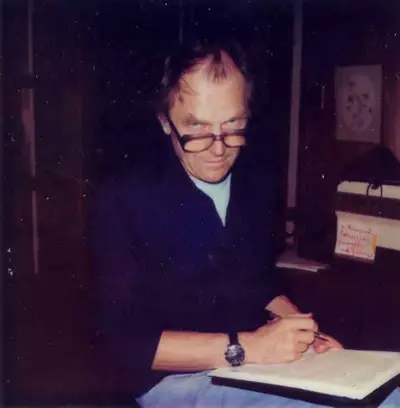
Paul Karl Feyerabend was an Austrian-born philosopher of science best known for his work as a professor of philosophy at the University of California, Berkeley, where he worked for three decades (1958–1989). At various points in his life, he lived in England, the United States, New Zealand, Italy, Germany, and finally Switzerland. His major works include Against Method (1975), Science in a Free Society (1978) and Farewell to Reason (1987). Feyerabend became famous for his purportedly anarchistic view of science and his rejection of the existence of universal methodological rules. He was an influential figure in the sociology of scientific knowledge. Asteroid (22356) Feyerabend is named in his honour.
