Desmond Tutu Quotes
There is no peace precisely because there has been no justice. As painful and inconvenient as justice may be, we have seen that the alternative allowing accountability to fall by the wayside is worse.
Tutu, Desmond. No Future Without Forgiveness. Doubleday, 1999.


There had been a coup in Fiji which had been put down after a few weeks. There was thought of not reopening the fissures of the society by identifying and trying the plotters and participants in the coup. The Senator did not agree.

This quotation appears on several courthouses in the United States.


The Senator was arguing against a bill to correct an aspect of the immigration law where infants and very young clildren are broght to the United States by parents who entered illegally. The children grow up in the United States—the only country and home that they have ever known. American law required that they be deported to “their countries” which they have no memory of and many do not even speak the language or know the culture. Sessions, is an example of the view that law defines justice. Therefore laws cannot be unjust nor can enforcing the law. Opponents point out that even in the United States we have, in earlier times, “enforced the law” which we came to regret and see as an injustice. The Fugitive slave laws, the Southern racial discrimination laws, and the law allowing Japanese American Citizens to be interned and lose their land during WWII are a few examples of laws, the enforcement of which is seen by most Americans as having been unjust. The execution of “witches” in early America was in conformity with the law.

Sharansky argued that Democracy had to come to the Arab nations in order to have peace. Buchanan tended to support many who would do Jews harm or had killed many Jews such as Nazi Concentration Camp gueards who were anti-Semitic, but he always claimed not to be anti-Semitic himself.

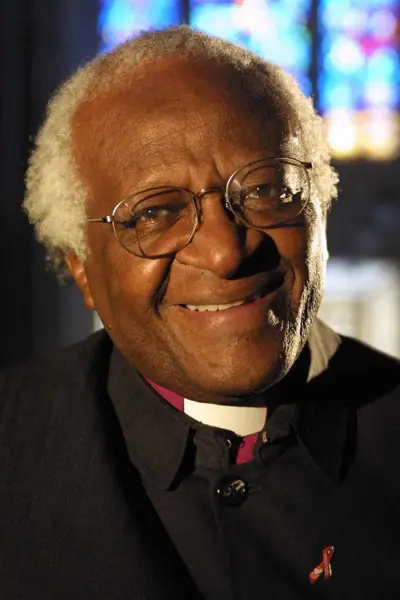
Desmond Mpilo Tutu OMSG CH GCStJ is a South African Anglican cleric and theologian, known for his work as an anti-apartheid and human rights activist. He was the Bishop of Johannesburg from 1985 to 1986 and then the Archbishop of Cape Town from 1986 to 1996, in both cases being the first black African to hold the position. Theologically, he sought to fuse ideas from black theology with African theology.
