William J. Brennan Jr. Quotes
There is no indication - either in the text of the Constitution or in our cases interpreting it - that a separate judicial category exists for the American flag alone. ... We decline ... therefore to create for the flag an exception to the … principles protected by the First Amendment.
In this case, the Supreme Court held that burning or desecrating the American flag may not be prohibited or criminalized by the government. Flag burning, they ruled, is symbolic speech and is protected by the 1st amendment just like political pamphlets.
William J. Brennan, Jr., 1906-1997, U. S. Supreme Court Justice, Texas v. Gregory Lee Johnson, June 21, 1989
Sourced by: Eigen's Political and Historical Quotations


Responding to George W. Bush's call for a constitutional amendment to make burning of the American flag illegal:


The reference is to "symbolic speech" such as flag burning.


This statement was made After the Senate straw-voted 58-42 in favor of a constitutional amendment against flag burning, less than the two-thirds required by the Constitution.

Referring to the Supreme Court decision, Texas v. Johnson (1989), in which flag burning was held to be constitutionally protected speech:

Trump was then President Elect who already had a large staff helping him fomake the transition. He still went off on his own with this state,ment whiich runs afoul of the Constitution which he would soon sware to defend when he took the Oath of Office. The Supreme Court had unequivocably ruled that the burning of the flag was a type of political speech and as such could not be curtailed or punished by the government. The penalty of a loss of citizenship was another constitutional thicket. In addition. in the hisoty of the country,, it had never been used as a punishment for breaking domestic law.


Often misquoted as ‘utterly without redeeming social value.’
Striking down a law making cross burning a crime:

In 1974 the Senate Foreign Relations Committee was investigating the wiretapping of American citizens. An FBI witness, Bernard Wells, testified that the wiretaps had demonstrated no disloyalty but they had identified some "loose talk:"


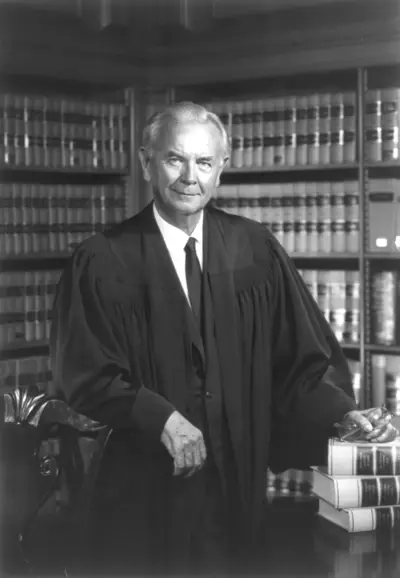
William Joseph Brennan Jr. was an American lawyer and jurist who served as an Associate Justice of the United States Supreme Court from 1956 to 1990. He was the seventh-longest-serving justice in Supreme Court history, and known for being a leader of the Court's liberal wing.
