Simon Wiesenthal Quotes
There is no denying that Hitler and Stalin are alive today... they are waiting for us to forget, because this is what makes possible the resurrection of these two monsters.
Wiesenthal, Simon. Justice Not Vengeance. Grove Weidenfeld, 1989.


Describing Egyptian President Gamal Abdel Nasser, 1918-1970


Statement when she was told that FDR would run for a third term as President.

This quotation is important because there are some who believed that the professional German Soldiers did not respect Hitler and his murderous policies. This quotation shows that at least publicly Donitz had no problem extolling Hitler above all others. After the war Donitz was found guilty of Unrestricted Submarine Warfare and using thousands of slave laborers in his shipyards. He was sentenced to 10 years, one of the lightest sentences if the German War Crimes Trials.

Sailer’s point is well taken though the accuracy of the numbers in his comparison depends on definition. If one assumes that the Hitler murders are confined to the 6 million or so Jews, Gypsies, and homosexuals then his numbers are right, But most people include the 22 million Russians killed in WWII and the other WWII deaths civilian and military and then Hitler caused deaths are much greater. However, the numbers are not critical to his point which is that under the guise of promoting equality many dictators have caused many deaths just as have the dictators who were preaching inequality. Extremism is always the problem.


Both of these famous Americans were admirers of Nazi Germany and Adolf Hitler. They both accepted medals from the German dictator. And both of them were apologists for German aggression and urged the United States not to side with England and to stay neutral in the War. The next year Germany declared war on the United States.

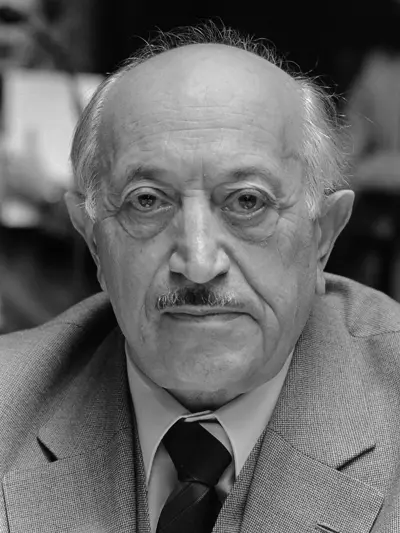
Simon Wiesenthal KBE was a Jewish Austrian Holocaust survivor, Nazi hunter, and writer. He studied architecture and was living in Lwów at the outbreak of World War II. He survived the Janowska concentration camp (late 1941 to September 1944), the Kraków-Płaszów concentration camp (September to October 1944), the Gross-Rosen concentration camp, a death march to Chemnitz, Buchenwald, and the Mauthausen-Gusen concentration camp (February to 5 May 1945).
