Norman Finkelstein Quotes
There is a fundamental principle. People have the right to defend their country from foreign occupiers, and people have the right to defend their country from invaders who are destroying their country. That to me is a very basic, elementary, and uncomplicated question.
Finkelstein, Norman. Gaza: An Inquest into Its Martyrdom. University of California Press, 2018.


1st Earl of Chatham. The speech was given in the midst of the American Revolution.


While to Madison the principle that “war is better than tribute” was “settled policy”, there were many who disagreed. See {640867} as an example.

This is a very important quotation in that there are some who believed—then and now—narrowly that self defense is limited to responding to only physical attacks on the United States per se. Kellogg made it clear that it includes attacks on the United States and any of its possessions. Most important it allows response to any “danger” to the United States. By this definition, for example, if Saddam had been developing weapons of mass destruction in the Iraq war, the pre-emptive attack would have been self-defense. Since the claim of weapons development was bogus, it was not self defense. The key variable a reasonable danger. Nations determine that by what others do and say. In 2011, if Iran were developing nuclear weapons the U. S. could attack as an act of self defense because the Iranian highest level officials have called for “death to the United States”. When they just had the intention to harm us, there was no danger. But when they add the means to harm us to the intention, that is a danger. Likewise other nations may act in self defense if a potential enemy threatens to endanger them and has the means to carry out the threats or desires.


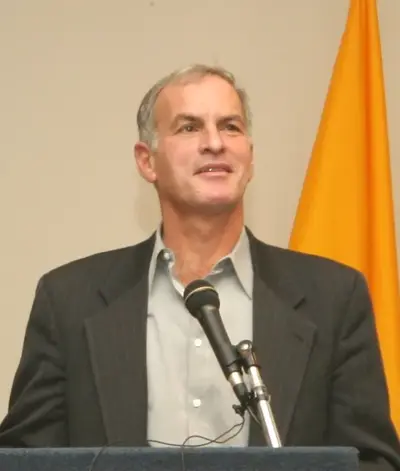
Norman Gary Finkelstein is an American political scientist, activist, former professor, and author. His primary fields of research are the Israeli–Palestinian conflict and the politics of the Holocaust. He is a graduate of Binghamton University and received his Ph.D. in political science at Princeton University. He has held faculty positions at Brooklyn College, Rutgers University, Hunter College, New York University, and DePaul University, where he was an assistant professor from 2001 to 2007.
