Mother Teresa Quotes
There are two victims in every abortion: a dead baby and a dead conscience.
Teresa, Mother. Mother Teresa: In My Own Words. Compiled by José Luis González-Balado, Gramercy Books, 1996, p. 89.


Churches are political organizations too and are subject to the forces of their membership. In the case of the Southern Baptist Convention in 1971 they passed resolutions to assure the right of a woman to have an abortion to protect her health. The position on abortion changed steadily thereafter to even pass Constitutional amendments to ban abortions except to save the life of the mother. See {614356},54122, {614358}, {614359}, {614360}, {614361} for the dynamic history of the change.


Sanger thought of as a radical feminist by many, was actually opposed to most abortions. This was not opposed on Biblical or religious grounds however. She saw most (non-medically indicated) abortions as necessitated by accidental, undesired pregnancies or pregnancies of women who could not economically afford a child. She felt the latter could and should be solved by progressive social and economic policies. And the former, could be prevented by contraceptives where were rarely used as the result of ignorance and the illegality of the sale of most devices.

In most parts of the country, if the legislators did not carve out the exceptions for rape incest and danger to the life of the mother, they would lose the majority of their support as most Americans who oppose the freedom of abortion that existed after Roe v. Wade, but really do not view abortion in the early trimester as murder. They just think that the regulation should be greater than it is.


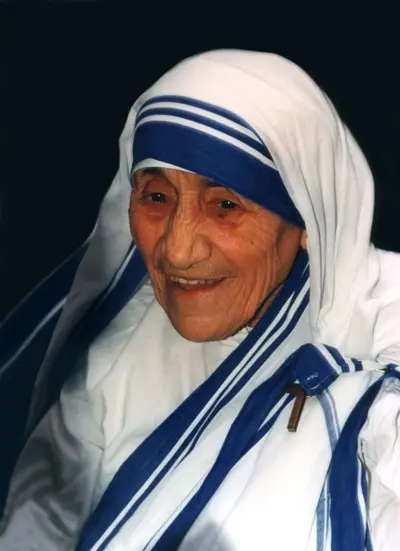
Mother Mary Teresa Bojaxhiu, honoured in the Catholic Church as Saint Teresa of Calcutta, was an Albanian-Indian Roman Catholic nun and missionary. She was born in Skopje (now the capital of North Macedonia), then part of the Kosovo Vilayet of the Ottoman Empire. After living in Skopje for eighteen years, she moved to Ireland and then to India, where she lived for most of her life.
