Atul Gawande Quotes
There are, in human affairs, two kinds of problems: those which are amenable to a technical solution and those which are not. Universal health-care coverage belongs to the first category: you can pick one of several possible solutions, pass a bill, and (allowing for some tinkering around the edges) it will happen.
Gawande, Atul. "Getting There from Here." The New Yorker, 26 Jan. 2009.


He was prophetic. It was the start of the Canadian health system as we know it today. precursor of the New Democratic Party.


Eisenhower later fired Hobby because when Salk invented the polio vaccine and Hobby did not get it distributed to all Americans regardless of their ability to pay. For a while, poor children kept getting polio after it was unnecessary. Arthur Flemming took over HEW and did the job as Eisenhower wanted. Eisenhower was a health advocate uncharacteristic of the conservative wing of his party at the time.


Unlike most forms of insurance virtually everyone will have one or more claims and collect in his or her lifetime. Many of use will never have an automobile crash and collect on our insurance policy, but health is different in that we all change health status from well to ill at times and if we are fortunate we return to a state of wellness. But as Eigen observes, most of us who are tell are only temporarily well, With time our state will change to ill and if we are not very fortunate we will never use our health insurance as we will be dead. There is almost no way to age in a modern society without needing health care or funeral services, That is the consequence of the normal process of aging. So with health insurance schemes we, in effect, pass money from the living well to the living ill. So if health care costs increase fastr than inflation, which it has almost always done in the last half century, the temporarily well will be paying more and more. The only way to break that cycle is to somehow limit the cost increases of health care to that of the inflationary increase. Eigen has argued that most of us focus on the wrong problem--the details of the way the well pay for the ill, when the only soltuion is to reduce the rate of increases of health care costs. And there are only 2 ways to do that: Reduce the compensation for all the health care actors--physicians, nurses, other staff, hospitals, and manufacturers of medical equipment, supplies and expecially pharmaceuticals which have been increasing at the fastest rate of all or wer privide more and more effective prevention.
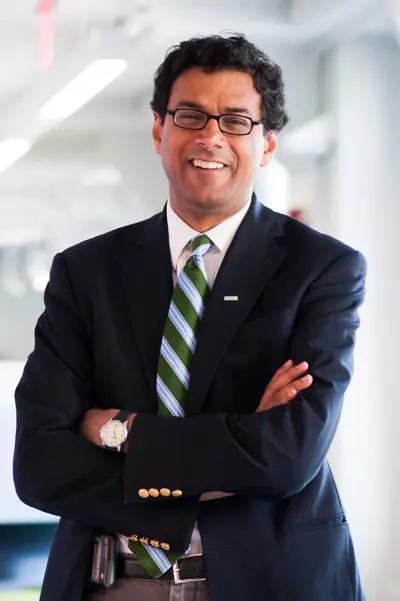
Atul Gawande is an American surgeon, writer, and public health researcher. He practices general and endocrine surgery at Brigham and Women's Hospital in Boston, Massachusetts. He is a professor in the Department of Health Policy and Management at the Harvard T.H. Chan School of Public Health and the Samuel O. Thier Professor of Surgery at Harvard Medical School. In public health, he is executive director of Ariadne Labs, a joint center for health systems innovation, and chairman of Lifebox, a nonprofit that works on reducing deaths in surgery globally. On June 20, 2018, Gawande was named the CEO of healthcare venture Haven, owned by Amazon, Berkshire Hathaway, and JP Morgan Chase and stepped down as CEO in May 2020.
