George F. Kennan Quotes
The worst thing our Communists could do to us, and the thing we have most to fear from their activities, is that we should become like them.
George F. Kennan, 1904-2005, Historian & U.S. Ambassador to Russia and Yugoslavia, “Where Do You Stand On Communism,” New York Times Magazine, May 17, 1951
Sourced by: Eigen's Political and Historical Quotations


Dodd, in Berlin from 1933 to the onset of WWII, was able to see first hand what Hitler and the Nazi Movement was really like, Although he for the United States and Churchill for England warned early on, the politics of the times would not allow any action to stop or curtail Hitler. America, in particular, had a strong isolationist Republican wing and in addition, a small but loud core of pro Fascist, Hitler admirers such as Charles Lindburg, Father Coughlin, and Henry Ford. America had virtually no serious military capacity at the time, and with the Depression, FDR had all he could do to just gradually build up the military. By the time the Democracies realized that Dodd and Churchill were right, it was too late to prevent WWII. Dodd died in 1940 just when it was clear that he had been right.


Russian Tanks moved into Prague and returned “order” ending the reform. Dubcheck was arrested and flown to the Soviet Union.


Baldwin had written a book praising revolutionary communism in Russia, but like many other American socialists, grew disillusioned with Russian Communism and Joseph Stalin’s dictatorship especially when in 1939 the Russians became allied with Hitler and Germany. Russia’s repression of civil liberties was far worse than anything he had seen in America. He was so negative about Russian Communism that in the early 1940s, he ejected all members of the Communist Party from membership in the ACLU.
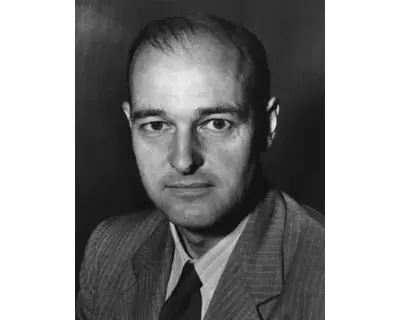
George Frost Kennan was an American diplomat and historian. He was best known as an advocate of a policy of containment of Soviet expansion during the Cold War. He lectured widely and wrote scholarly histories of the relations between the USSR and the United States. He was also one of the group of foreign policy elders known as "The Wise Men".
